What Is a Battle Rifle? Definition, Examples and Uses
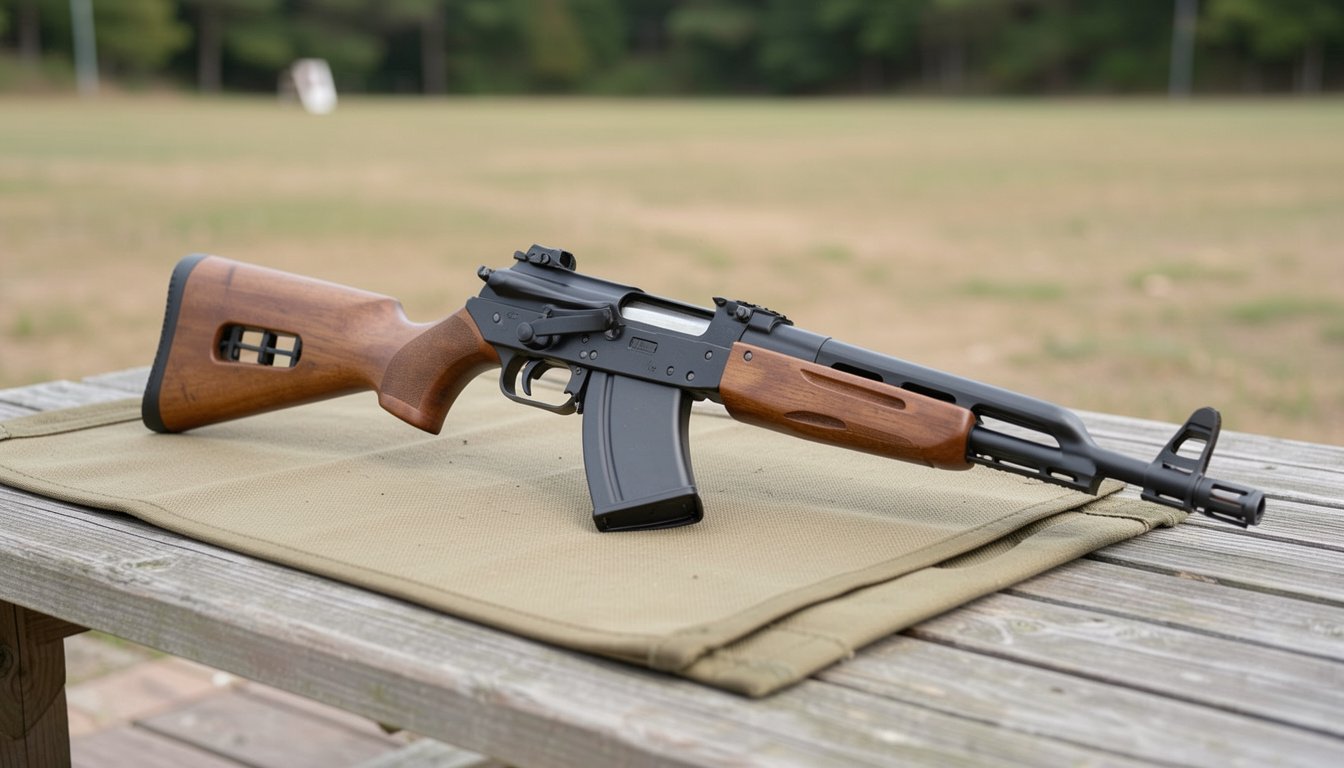
A battle rifle is a military-style, self-loading rifle that fires a full-power rifle cartridge, most often 7.62x51mm NATO (.308 Winchester). It is an informal term, not an official legal or military category.
The phrase is mostly used for rifles from the 1940s to the 1970s, such as the M14, the FN FAL and the H&K G3. These rifles sit between old bolt-action service rifles and the lighter assault rifles that replaced them.
The term was largely created to separate those heavier-hitting rifles from intermediate-cartridge designs like the M16 and AK-47. Today it also describes civilian semi-automatic rifles built on the same patterns.
Below you’ll find a clear definition, the history, the key models, how battle rifles compare with other rifle types, and what to think about if you want to own one.
Keep reading to see what really makes a rifle a battle rifle.
Key Takeaways
- A battle rifle is a self-loading military-pattern rifle chambered for a full-power cartridge like 7.62x51mm NATO.
- The term is informal and was coined mainly to tell these rifles apart from intermediate-cartridge assault rifles.
- Classic examples include the M14, FN FAL and H&K G3, with older rifles like the M1 Garand sometimes included.
- Battle rifles offer more power and range than assault rifles, but they are heavier and harder to control in rapid fire.
- Civilian semi-automatic versions are legal in many places, but laws vary, so confirm the rules where you live.
What Is a Battle Rifle? The Basic Definition
A battle rifle is generally described as a military service rifle that is semi-automatic or select-fire and fires a full-power rifle cartridge. Most definitions also include a detachable box magazine, though older designs used other feeding systems.
The key phrase is “full-power.” That means a cartridge like 7.62x51mm NATO or 7.62x54mmR, not a smaller intermediate round like 5.56x45mm NATO or 7.62x39mm.
Gun writers do not fully agree on the edges of the term. Some say it only covers post-World War II select-fire rifles. Others include earlier self-loaders like the M1 Garand. Because there’s no official definition, you will see slightly different lists depending on the source.
Core Features of a Battle Rifle
- Full-power cartridge: usually 7.62x51mm NATO, sometimes .30-06 or 7.62x54mmR.
- Self-loading action: semi-automatic, with many military versions also offering select-fire.
- Military service role: designed to be issued to infantry, not just built for sport.
- Longer, heavier build: the cartridge needs a stronger action and a longer barrel for good performance.
- Typically 10 to 20 round magazines: often smaller than modern assault rifle magazines, partly because the rounds are bigger.
The History of the Battle Rifle
Early self-loading military rifles appeared before World War I, and some historians point to designs like the Mondragón or the Russian Fedorov Avtomat as early examples. But most armies still used bolt-action rifles through World War II. The United States was the main exception, because it fielded the semi-automatic M1 Garand as its standard rifle.
The Garand fed from an internal magazine using an en-bloc clip holding eight .30-06 rounds. It proved that a self-loading rifle could be a general-issue infantry weapon.
After the war, many countries moved to a new generation of rifles. These used detachable box magazines and, in many cases, selective fire. The FN FAL, developed by Fabrique Nationale in Belgium, was adopted by many NATO countries during the Cold War. The U.S. adopted the M14, and West Germany adopted the G3.
Then combat experience and the Vietnam War era pushed militaries toward lighter rifles and smaller cartridges. The M16 influenced the rest of NATO to adopt assault rifles. Battle rifles faded as standard infantry weapons, but they never fully disappeared.
Famous Battle Rifles at a Glance
Several rifles come up in almost every discussion of the category. This table gives a quick reference to the most commonly named ones.
| Rifle | Country of origin | Typical cartridge | Notes |
|---|---|---|---|
| M1 Garand | United States | .30-06 Springfield | Semi-auto, 8-round en-bloc clip. Sometimes called the first true battle rifle. |
| FN FAL | Belgium | 7.62x51mm NATO | Used by many countries during the Cold War. |
| M14 | United States | 7.62x51mm NATO | Select-fire service rifle. Civilian semi-auto versions exist. |
| H&K G3 | West Germany | 7.62x51mm NATO | Roller-delayed blowback action. Widely exported. |
| SCAR-H | Belgium / United States | 7.62x51mm NATO | A modern example of the type. |
Battle Rifle vs. Assault Rifle vs. Carbine
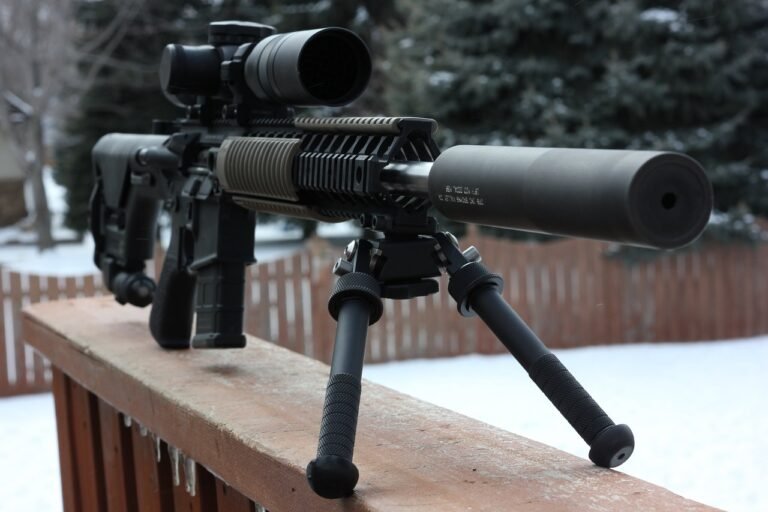
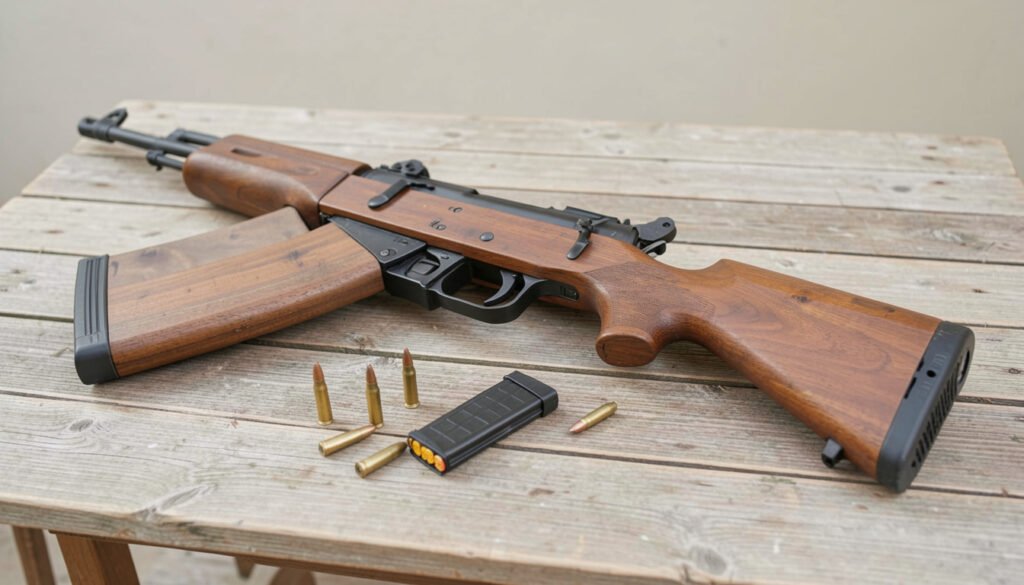
This is where most confusion starts. The three terms describe different things, and they overlap in appearance. A modern battle rifle can look a lot like an assault rifle, with a pistol grip, detachable magazine and a modular receiver.
The real difference is the cartridge. An assault rifle fires an intermediate cartridge and is usually selective fire. A battle rifle fires a full-power one. A carbine is defined by its short barrel and compact size, and it can be chambered for many different rounds. For more on that last category, see this plain-English guide to what a carbine rifle is.
Quick Comparison
- Battle rifle: full-power cartridge, longer range and more energy on target, heavier recoil and weight.
- Assault rifle: intermediate cartridge, lighter ammunition, easier to control in fast shooting, higher magazine capacity.
- Carbine: shortened rifle for handiness, with the cartridge varying by model.
Note that the word “assault” in “assault rifle” has a specific technical meaning in military use. Legal definitions of “assault weapon” are different again and vary from place to place, so do not treat them as the same thing.
Strengths and Weaknesses of a Battle Rifle
Strengths
- Power and range: the full-power cartridge carries more energy at distance and handles wind better than smaller rounds.
- Barrier performance: heavier bullets typically do better through light cover.
- Versatility: .308-class ammunition is widely available, and it works for target shooting and some hunting.
Weaknesses
- Recoil: it is much harder to keep on target during fast strings of fire, especially in full-auto.
- Weight: both the rifle and the ammunition are heavier, which matters on a long day.
- Size: longer receivers and barrels make them less handy indoors or in vehicles.
Those trade-offs explain why most armies moved on. In many modern conflicts, engagements happen at shorter ranges where the battle rifle’s advantages are wasted, so lighter rifles made more sense for general issue.
Pro tip: if you’re choosing between a battle rifle and a lighter rifle, decide your typical shooting distance first, because that tells you whether you need the extra power.
Where Battle Rifles Are Used Today
Most standard infantry rifles are now intermediate-cartridge designs. Still, full-power rifles have kept a place in modern militaries, mainly as designated marksman rifles. These are semi-automatic rifles used to hit targets beyond the normal range of an assault rifle. The American M110 is one example.
Civilian Use
Civilian shooters use semi-automatic battle rifle patterns for several reasons:
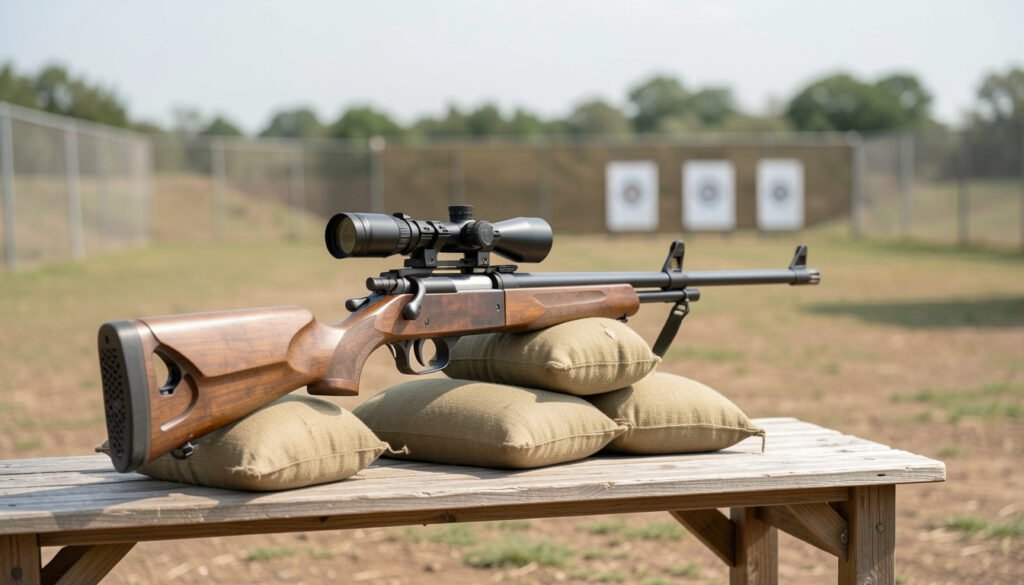
- Target shooting and competition: service rifle matches, long-range practice and some multi-gun events.
- Collecting: many people enjoy owning rifles tied to historic military service, such as the Garand or M14-pattern rifles.
- Hunting: a .308-class rifle can be suitable for medium game where the cartridge is legal and appropriate. Always check your local hunting regulations.
Be aware that civilian versions are generally semi-automatic only. Select-fire rifles are tightly regulated in many countries and, where legal at all, require specific licensing and paperwork. Converting a semi-automatic rifle to fire automatically is illegal without proper authorization, so never attempt it.
What to Know Before Owning a Battle Rifle
Laws on semi-automatic rifles differ by country, state and even city. They can cover magazine capacity, features, transfers and storage. Check with official sources such as the ATF (in the U.S.), your state agency, local law enforcement or a qualified attorney before you buy.
Then think about handling and fit. These rifles kick harder than a typical .223 or 5.56 rifle. Good fundamentals help a lot, and our guide on how to hold a rifle correctly covers the stance and grip basics. Once you have the rifle, learn how to sight in a rifle so it hits where you aim.
Safety Basics
- Treat every gun as loaded, every time you pick it up.
- Keep the muzzle pointed in a safe direction.
- Keep your finger off the trigger until your sights are on target and you’re ready to fire.
- Unload the rifle and verify the chamber and magazine well are empty before cleaning or maintenance.
- Use hearing and eye protection, since full-power rifles are loud.
Older surplus rifles may need inspection. If you buy a vintage rifle, have a qualified gunsmith check it before you shoot it, and match the ammunition exactly to the chambering.
Frequently Asked Questions
Is the AR-15 a battle rifle?
No. The AR-15 pattern is normally chambered in 5.56x45mm NATO, an intermediate cartridge, so it fits the assault-rifle class in design terms. Larger-frame AR-10 style rifles in .308 are closer to battle rifles in their cartridge.
Is an AK-47 a battle rifle?
Usually not. The AK-47 fires the intermediate 7.62x39mm cartridge, so most definitions place it among assault rifles. Rifles that fire the full-power 7.62x54mmR, however, are sometimes included.
Is the M1 Garand a battle rifle?
Many people say yes, though some narrower definitions disagree. It is a full-power, semi-automatic military rifle in .30-06, which meets the basic description. It is generally seen as a forerunner of the later battle rifles.
What caliber do battle rifles use?
Most use 7.62x51mm NATO, which is very close to the civilian .308 Winchester. Some older rifles use .30-06 Springfield or 7.62x54mmR. Check the markings on your specific rifle and never assume cartridges are interchangeable.
Conclusion
A battle rifle is a self-loading military-pattern rifle firing a full-power cartridge. The term is informal, but it is useful for separating rifles like the M14, FAL and G3 from lighter assault rifles and carbines.
These rifles trade handiness and light recoil for power, range and durability. That makes them a good fit for some collectors, target shooters and hunters, and a poor fit for others.
If you’re thinking about getting one, check your local laws, practise safe handling and get properly trained. With those basics in place, you can pick the right rifle for how you actually shoot.