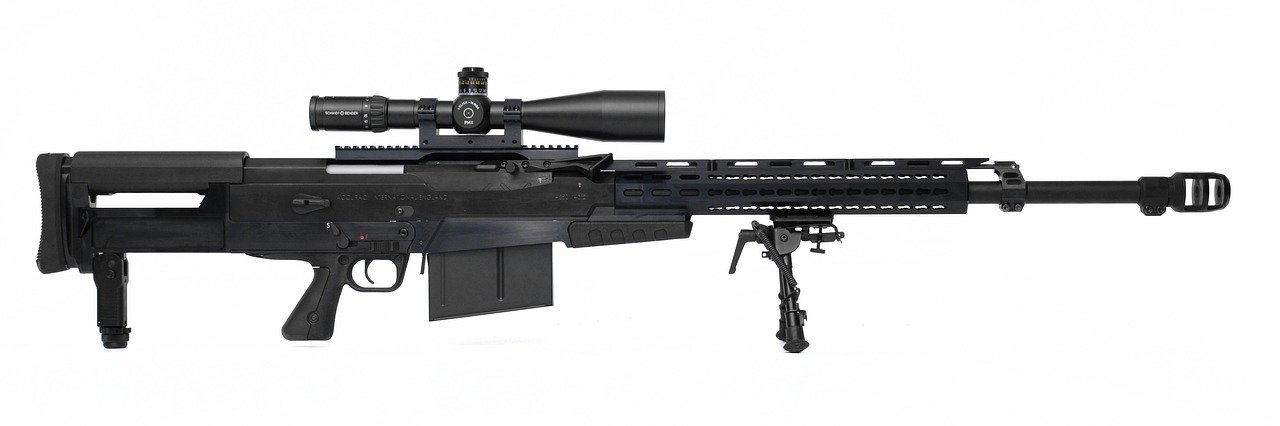
How to Sight In a Rifle: 7 Easy Steps to a 100-Yard Zero
To sight in a rifle, you line up your sights or scope with where the bullet actually lands. You do that by bore sighting first, shooting a three-shot group from a steady rest, then moving your sights to the center of that group.
Most shooters start at 25 yards to get on paper. Then they move back to 100 yards to set their final zero. The whole job usually takes a box or two of ammo and an hour or so at the range.
Whether you just mounted a new scope or you’re getting ready for deer season, a good zero makes every shot count. It also means a clean, ethical shot in the field.
This guide covers rifles with scopes and with iron sights. It also explains the MOA math in plain terms, so you know how far to move your adjustments.
Keep reading and you’ll have a clear, repeatable routine.
Key Takeaways
- Bore sight first so your opening shots land on paper at 25 yards. This saves ammo and time.
- Always shoot three-shot groups from a stable rest, and adjust to the center of the group, not to a single hole.
- On most scopes, one click equals 1/4 MOA, which is about 1/4 inch at 100 yards. Four clicks move your point of impact about one inch.
- Confirm your final zero at 100 yards (or your chosen distance) using the same ammunition you plan to hunt or shoot with.
- Safety comes first at every step: treat every gun as loaded, keep the muzzle downrange and wear eye and ear protection.
Gather Your Gear and Pick a Safe Range
Start with the right setup. A good sight-in session needs more than a rifle and a box of ammo. Pack these items:
- Your rifle and the same ammunition you plan to use afterward
- Paper targets with a clear bullseye or grid
- A solid bench, a front rest and a rear sandbag
- Eye and ear protection
- A small screwdriver or the correct tool for your sights, and a pen to log your adjustments
- A laser bore sighter (optional)
Use a staffed range or a property where you know you can shoot legally and safely, with a proper backstop. In Oklahoma, check range rules or local ordinances before you shoot on private land. If you’re unsure, ask the range officer or local law enforcement.
Follow the basic safety rules the whole time. Treat every gun as loaded, keep the muzzle pointed downrange, keep your finger off the trigger until you’re ready to fire, and keep the action open when the range is cold.
Check Your Scope, Mounts and Fit
A loose part can ruin a zero before you fire a shot. Unload the rifle and verify the chamber and magazine are empty. Then check that the scope rings, bases and action screws are snug. A loose action screw can look like a sight problem and undo your work.
Next, set up your scope for your eye.
- Shoulder the rifle, pointed safely, and look at a plain background such as the sky or a blank backstop.
- Turn the eyepiece until the reticle looks sharp.
- If your scope has a parallax or side-focus knob, set it for your shooting distance. The reticle shouldn’t seem to shift when you move your head.
- Check eye relief. You should see a full, clear field of view. Dark edges mean you need to move the scope or adjust your head position.
If you’re not comfortable mounting a scope or leveling the reticle, a qualified gunsmith can do it properly.
Bore Sight Your Rifle First
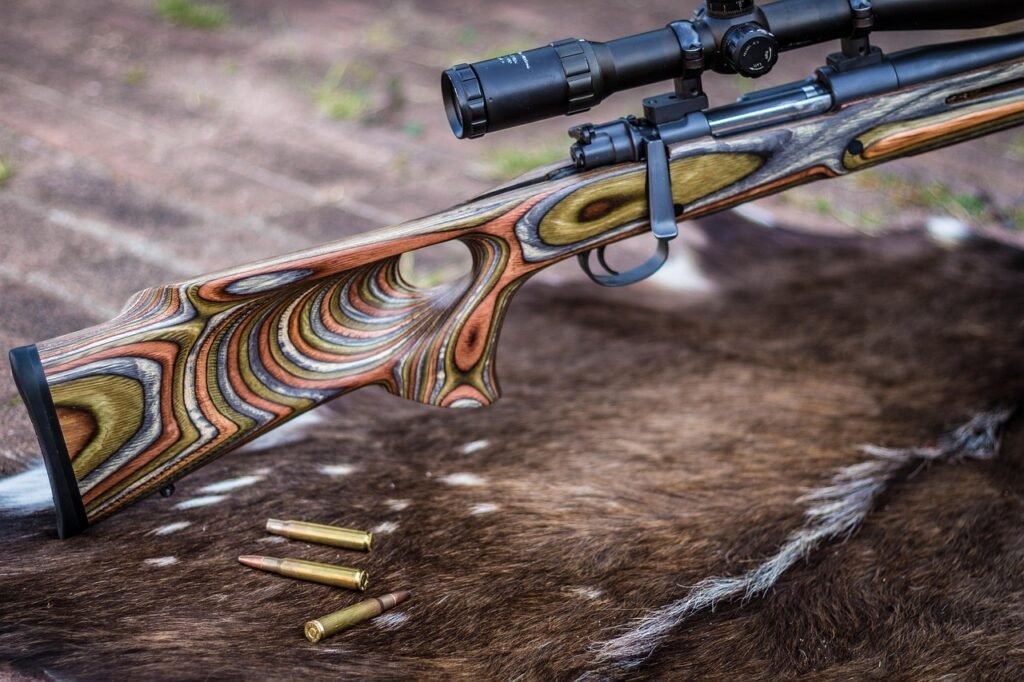
Bore sighting lines up the barrel and the sights roughly, so your first live shots hit the paper. It isn’t a final zero. It just gets you close.
Laser bore sighter
Make sure the rifle is unloaded. Insert the laser into the chamber or muzzle as its instructions describe. Turn it on and adjust your scope until the reticle sits on the laser dot at 25 yards.
Bolt-action method (no tools)
With a bolt-action rifle, you can bore sight for free:
- Unload the rifle and remove the bolt. Look through the chamber to confirm it is empty.
- Rest the rifle so it can’t move, with a target at 25 yards.
- Look down the bore and move the rifle until the bullseye is centered in the barrel.
- Without moving the rifle, adjust your windage and elevation until the reticle is on the same spot.
Many ranges have a bore-sighting collimator, and a gun shop or gunsmith may also do this for you.
Set Up a Stable Rest

Your goal is to remove your own wobble from the equation. Put the rifle’s forend on a padded front rest or sandbag, and support the butt with a rear bag. Don’t rest the barrel itself on the support. That can change where the rifle shoots.
Keep your hold the same for every shot. Place your cheek on the stock the same way and keep a light, steady shoulder pressure. Let the rest hold the rifle, and avoid muscling it into position.
Pro tip: Use the same hold, the same rest and the same ammo for every group so you’re only changing one thing, the sights.
You can sight in from prone, but a bench and rests make the job easier and more repeatable.
Fire a Three-Shot Group at 25 Yards
Set a fresh target at 25 yards. Aim at the center of the bullseye and fire three shots, taking your time on each one. Pause between shots so the barrel doesn’t heat up too much.
Why three? No rifle puts every bullet through the same hole. A group shows you the average point of impact, and that average is what you adjust to. A single shot can mislead you.
If the group is tight but away from the bullseye, your sights need adjusting. The size of the group doesn’t matter for this step. What matters is where its center lands. If the shots are scattered widely, recheck your mounts, your hold and your technique before you touch the sights.
Once the range is clear and the rifle is safe, measure how far the center of the group is from your point of aim. Note whether it is high or low, left or right.
Adjust Your Scope to Sight In a Rifle Accurately
Now you convert that measurement into clicks. MOA (minute of angle) is about 1 inch at 100 yards and about 2 inches at 200 yards. Most scopes are marked 1/4 MOA per click, but check your scope’s manual or turret markings.
At 25 yards, the same click moves the bullet only about a quarter as far as it would at 100 yards. So at 25 yards, you need more clicks to move the group by the same number of inches. Many shooters simply aim to get close at 25 yards, then fine-tune at 100.
| Distance | 1 MOA equals about | Clicks to move 1 inch (1/4 MOA scope) |
|---|---|---|
| 25 yards | 1/4 inch | 16 clicks |
| 50 yards | 1/2 inch | 8 clicks |
| 100 yards | 1 inch | 4 clicks |
| 200 yards | 2 inches | 2 clicks |
Here’s an example. If your group is 2 inches left at 100 yards, you need about 2 MOA of right adjustment. On a 1/4 MOA scope, that’s about 8 clicks. Most turrets have arrows showing which way the bullet impact will move, so follow those.
Iron sights
With a rear sight, move it in the direction you want the group to go. If the group is low, raise the rear sight. If it’s left, move the rear sight right. A front post works the opposite way. Read your sight’s manual, since click values vary.
Make small changes and write them down. After adjusting, fire another three-shot group and repeat until you’re centered.
Confirm Your Rifle Zero at 100 Yards
Once you’re on target at 25 yards, move the target to 100 yards. Fire another three-shot group, measure it and adjust again. Often you need only a few clicks.
When the group is centered, fire a final confirming group. Let the barrel cool between strings, since a hot barrel can shift your point of impact. Then record your settings and the ammunition you used.
100 yards is a common zero for many hunting rifles. Some shooters choose a different distance depending on the cartridge and the game they hunt. If you plan to take shots at other ranges, a ballistic chart for your load can help. If you’re only comfortable at shorter ranges, zero for that distance and limit your shots to it.
Finally, switching ammo can change where your rifle shoots. If you change brands or bullet weights, shoot a check group before you rely on your zero.
Frequently Asked Questions
How many shots does it take to sight in a rifle?
It depends on how close you start. With good bore sighting, many shooters finish in about six to fifteen rounds. Always shoot in three-shot groups so you adjust to the average rather than a single shot.
What distance should I sight in my rifle?
Most people start at 25 yards to get on paper and finish at 100 yards. The best final distance depends on your cartridge and the shots you expect to take. Pick one, confirm it with real groups and learn how your bullet drops beyond it.
Do I need to bore sight before sighting in?
It isn’t required, but it’s a smart shortcut. Bore sighting gets your first shots on paper so you don’t waste ammo hunting for the target. It’s especially helpful with a newly mounted scope.
Why won’t my rifle group consistently?
Common causes include loose scope mounts or action screws, an unstable rest, a hot barrel and inconsistent technique. Ammunition can also matter, since some rifles prefer certain loads. Fix the basics first, and see a gunsmith if the problem continues.
Conclusion
Sighting in a rifle comes down to a few repeatable habits. Check your mounts, bore sight, shoot three-shot groups from a steady rest, adjust by the center of the group, and confirm at 100 yards. Keep the same ammo through the process and take notes as you go.
Stay patient, and don’t chase single shots. A calm, methodical session gives you a zero you can trust, and confidence when it counts. Keep safety first the whole time, and follow range rules and Oklahoma law wherever you shoot.
If you have questions about your rifle, scopes or getting ready for the range, stop by Sooner Guns at 5663 S Mingo Rd in Tulsa or call us at 918-286-8888. Guns for the good guys and gals.