What Is a Fundamental of Rifle Marksmanship? 5 Key Skills
A fundamental of rifle marksmanship is breath control. It is one of the core skills that make up accurate shooting, along with a steady position, aiming, trigger control and follow-through. If you saw this as a multiple-choice question, “control your breathing” is the right answer. Options like “lead on target” or “slapping the trigger” are not fundamentals.
The exact list changes a little between organizations. Military manuals, competitive shooting groups and hunter education courses all word it differently. They still teach the same ideas: stability, sight alignment, breathing and a clean trigger press.
These skills matter because rifles do not miss on their own. Almost every miss traces back to a small error in how you held, aimed, breathed or pressed the trigger. Fix those habits and your groups shrink.
Below, you will see what each fundamental means, how to apply it and how to practice safely. Keep reading to build a shot process you can repeat every time.
Key Takeaways
- Breath control is a fundamental of rifle marksmanship, and it works together with position, aiming, trigger control and follow-through.
- Most sources list four or five fundamentals. The names differ, but the skills overlap almost completely.
- A stable position built on bone support beats muscling the rifle into place.
- A smooth trigger press that does not disturb the sights is the skill that most separates good shooters from average ones.
- Safe dry-fire practice is the cheapest way to improve, as long as the rifle is unloaded and verified clear first.
What Are the Fundamentals of Rifle Marksmanship?
The fundamentals of rifle marksmanship are the basic techniques that let you place every shot where you intend. Military training materials commonly list them as aiming, stability of hold, breath control, trigger control and follow-through. Other sources fold some together. Some list four, such as steady position, aiming, breath control and trigger squeeze. Some split aiming into sight alignment and sight picture.
The Civilian Marksmanship Program describes the same ideas in three groups: rifle stability, rifle-target alignment and shot control. It is the same skill set, organized differently.
Quick Reference Table
| Fundamental | What It Means | Common Mistake |
|---|---|---|
| Steady position | Holding the rifle so it settles naturally on the target | Using muscle tension instead of bone support |
| Aiming | Aligning the sights (or optic) and placing them on the target | Focusing on the target instead of the front sight |
| Breath control | Pausing at a natural stopping point in your breathing | Holding your breath too long |
| Trigger control | Pressing straight back without moving the rifle | Jerking or slapping the trigger |
| Follow-through | Keeping your position and focus after the shot breaks | Lifting your head or relaxing too early |
None of these works alone. A perfect trigger press cannot save a wobbly position, and a rock-solid position cannot fix poor sight alignment.
Build a Steady Position First
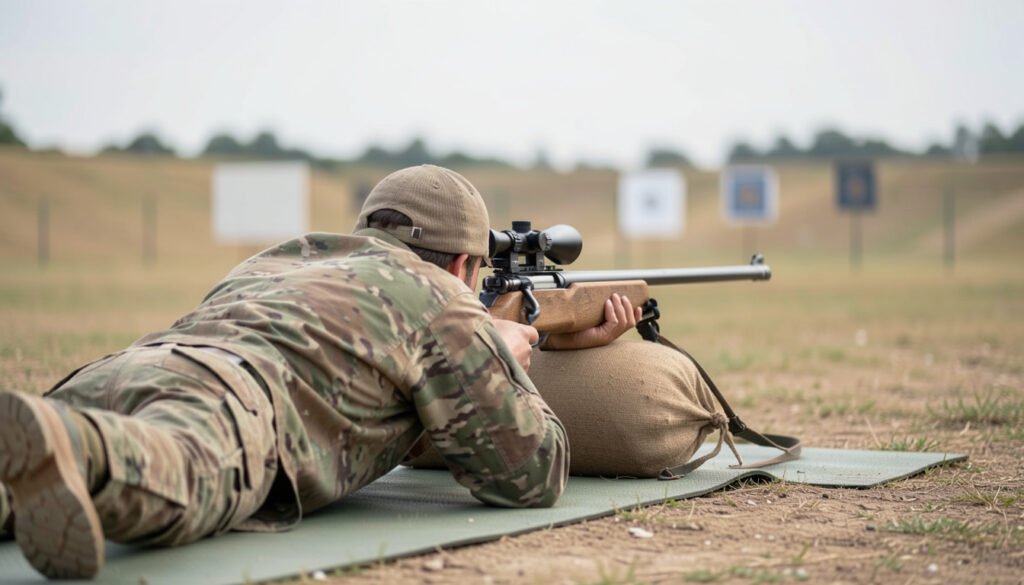
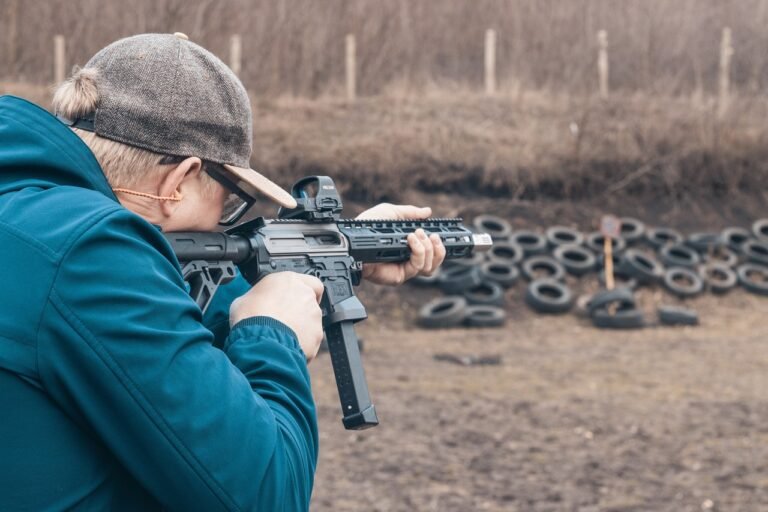
Stability comes first because every other skill depends on it. Your goal is a position where the rifle points at the target with little effort from your muscles. Muscles tire and shake. Bones and a good support do not.
Points of Contact
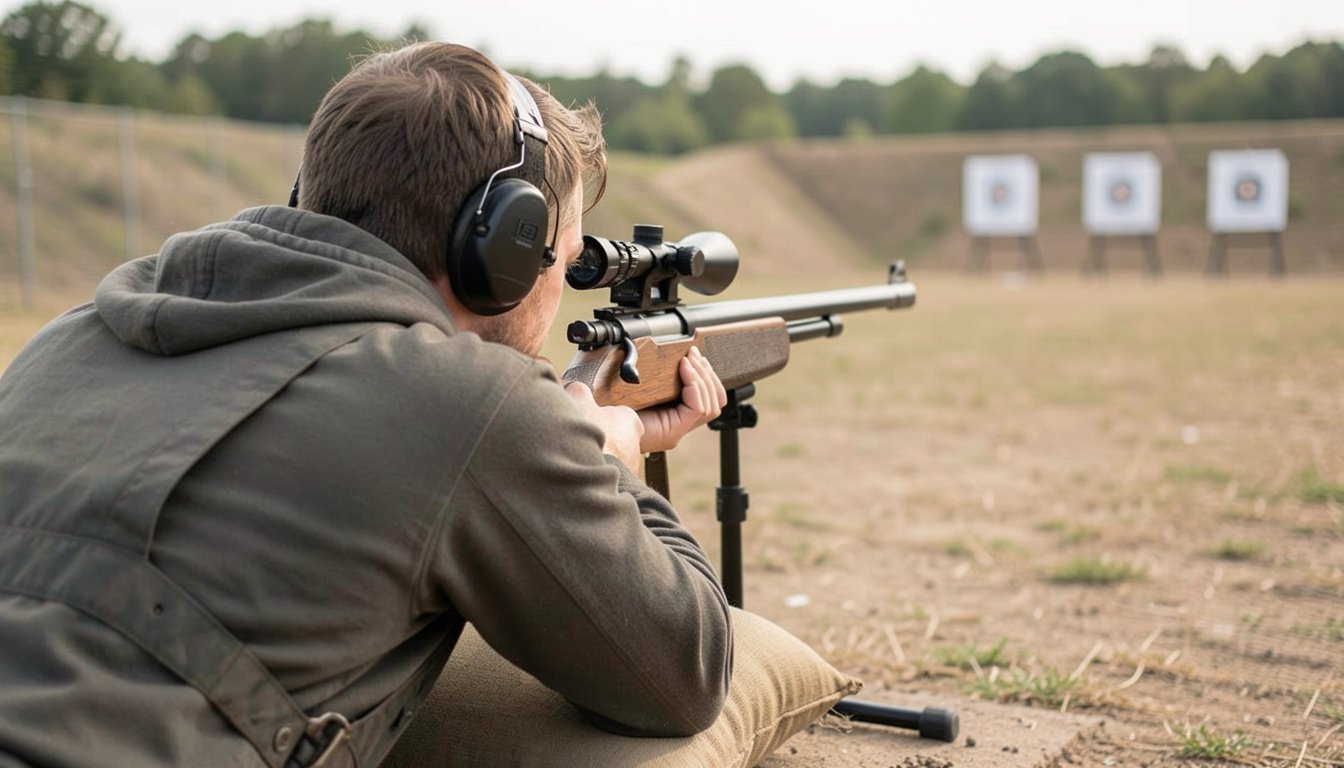
A rifle touches you in four main places: your firing hand, your support hand, your shoulder pocket and your cheek. Keep these consistent from shot to shot. A consistent cheek weld matters most with iron sights and scopes, because a different head position changes what you see.
If you are new to the basics of how a rifle should sit in your hands and shoulder, the guide on how to hold a rifle correctly walks through it step by step.
Choosing a Shooting Position
- Prone: The most stable position because your body is closest to the ground.
- Sitting or kneeling: A good middle ground with decent stability and quicker setup.
- Standing: The least stable position, but often needed in the field.
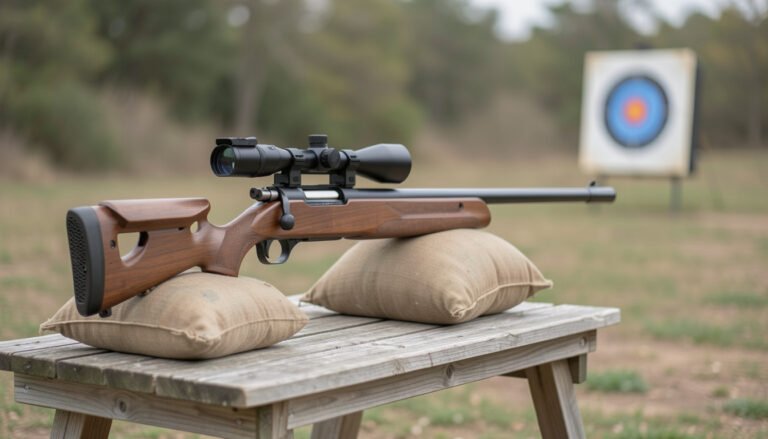
- Supported: A bench, sandbags or a bipod removes much of the human wobble.
Learn your natural point of aim. Close your eyes, settle into position, then open them. If the sights have drifted off the target, shift your whole body, not just your arms, until the sights land back on it.
Learn Aiming: Sight Alignment and Sight Picture
Aiming has two parts. Sight alignment is the relationship between your front sight, rear sight and eye (or the dot or reticle in an optic). Sight picture is how that aligned sight sits on the target.
With iron sights, your eye can only focus on one thing at a time. Focus on the front sight. The target will look a little soft, and that is correct. A small alignment error at the rifle becomes a large miss at distance, so alignment matters more than a perfectly clear target.
With a red dot, keep both eyes open and focus on the target. With a scope, set a comfortable eye relief so you see a full, clear circle, and keep your head position the same every time.
Aiming also assumes your rifle is zeroed. If your shots land away from the point of aim even with good form, check your zero. The guides on sighting in a rifle to a 100-yard zero and sighting in a rifle scope cover that process.
Practice Breath Control Before Every Shot
This is the fundamental that answers the keyword question. Your lungs move your chest, and your chest moves the rifle. Breath control reduces that movement at the moment you fire.
A Simple Breathing Routine
- Take a few normal breaths as you settle into position.
- Inhale, then let out part of the breath naturally.
- Pause at the natural respiratory pause, the brief stop before you breathe in again.
- Finish the trigger press during that pause.
Do not hold your breath for a long time. After about eight to ten seconds, most people’s vision gets worse and muscles start to tremble. If the shot is not ready, lower your breathing back to normal, then start the cycle again.
Breath control works best when it is calm and automatic. Rushing it makes you tense, and tension makes the sights drift.
Master Trigger Control and Follow-Through
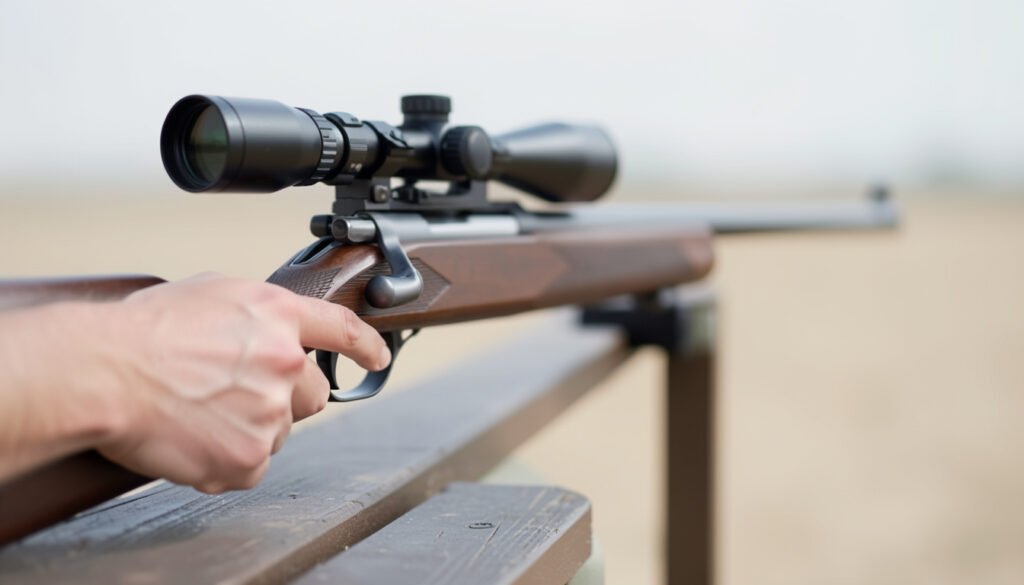
Trigger control is the skill of firing the shot without disturbing the sight alignment. It is often called the most important fundamental after aiming, because even a small jerk will pull the shot off target.
Press Straight Back
Place the pad or the first joint of your finger on the trigger, depending on what feels natural and gives a straight-back press. Take up any slack, then add pressure smoothly until the shot surprises you. Do not anticipate the recoil. A shooter who flinches is pushing the rifle forward or tightening up just before the shot.
Pro tip: Use a smooth, steady press, and let the exact moment of the shot surprise you so you cannot flinch.
Follow Through
Follow-through means you keep doing everything right after the bullet leaves the barrel. Hold your position, keep your cheek on the stock, keep your eye on the sights and keep the trigger pressed to the rear for a moment. Then release the trigger and reset.
The bullet is still in the barrel for a tiny fraction of a second after you start the shot. Moving too soon can shift the rifle before the bullet exits. Good follow-through also lets you see where the sights were at the instant of firing, which helps you diagnose your own shots.
Practice the Fundamentals of Rifle Marksmanship Safely
Understanding the fundamentals is not the same as being able to apply them. Practice builds habit, and habit holds up under pressure. Always follow the core safety rules first:
- Treat every rifle as if it is loaded.
- Keep the muzzle pointed in a safe direction at all times.
- Keep your finger off the trigger until your sights are on the target and you are ready to fire.
- Be sure of your target and what is beyond it.
Dry-Fire Practice
Dry fire means practicing your position, aiming and trigger press without ammunition. Before you start, unload the rifle, remove the magazine, check the chamber and verify it is empty, and keep all ammunition out of the room. Choose a safe direction for the muzzle. Some rimfire rifles can be damaged by dry firing, so check your owner’s manual first. If you are using a small-caliber rifle, our explainer on what a rimfire rifle is can help you understand why that matters.
Live-Fire Habits
- Shoot small groups of three to five rounds and evaluate them, rather than firing many rounds without thought.
- Start with a supported position, then move to prone, sitting and standing as your skill grows.
- Use a low-recoil rifle, such as a rimfire, to build trigger and breathing habits without developing a flinch.
- Change one thing at a time so you know what worked.
If you are new to shooting, a certified instructor or a local range safety course can spot problems you cannot feel yourself. Rules for transporting and using rifles vary by location, so check with your state wildlife agency or local law enforcement if you are unsure.
Frequently Asked Questions
What are the four fundamentals of rifle marksmanship?
The four most commonly taught are steady position, aiming (sight alignment and sight picture), breath control and trigger control. Some programs add follow-through as a fifth. Others combine them differently, but the content is the same.
Is breath control a fundamental of rifle marksmanship?
Yes. Breathing moves your body and the rifle, so you time your shot to the natural pause at the end of an exhale. Learning it is part of becoming a consistent shooter.
Which fundamental is the most important?
They all work together, but many instructors single out trigger control. A shooter can have a good position and perfect sight alignment and still miss by jerking the trigger. A steady position is the base that makes good trigger control possible.
Do the fundamentals apply to hunting and not just target shooting?
Yes. A hunter faces the same physics, with the added challenges of weather, nerves and field positions. Practicing the fundamentals before the season helps you make clean, ethical shots.
Conclusion
A fundamental of rifle marksmanship is any of the core skills that make accurate shooting repeatable: steady position, aiming, breath control, trigger control and follow-through. Breath control is the one most multiple-choice questions look for, but the skills only work as a set.
Start with a stable position, line up your sights, settle your breathing, press the trigger smoothly and stay in position after the shot. Practice them one at a time, then put them together.
Keep your practice safe, keep it simple and keep it consistent. Accuracy is a skill you can build, one good shot at a time.