Ideal Targets for Rifle Shooting: Types and How to Choose
The ideal targets for rifle shooting are stationary targets. They give you a steady, predictable aiming point so you can focus on the basics: sight alignment, breathing and trigger control. If you saw this as a multiple-choice question, “stationary” is the answer.
In real life, though, the best target also depends on your rifle, your ammunition and your goal. A paper target is great for checking accuracy. A steel target gives instant feedback at distance. A self-healing polymer target holds up to lots of rounds.
This guide explains why stationary targets come first, how each target type compares, and how to match one to your rifle. It also covers the range safety points that apply to every target.
Keep reading to find the right target for your next range trip.
Key Takeaways
- Stationary targets are ideal for rifle shooting because they let you learn and measure accuracy without extra variables.
- Paper targets are the best starting point for beginners, sighting in and checking group size.
- Steel targets must be rated for rifle use, and you must follow the maker’s minimum distance and ammunition limits.
- Match target durability to your cartridge: thin paper and cardboard suit low-powered rifles, while hard-hitting rounds need tougher materials.
- Always check range rules and your backstop before you set up any target.
Why Stationary Targets Are Ideal for Rifle Shooting
A stationary target stays put, so every miss tells you something about you or your rifle. Moving or airborne targets add the difficulty of predicting motion and leading the shot. That is a poor way to learn the fundamentals.
Stationary targets also let you measure progress. You can shoot a group, check its size and see where it sits relative to your point of aim. That makes them the natural choice for sighting in and for building skill.
Targets set against the sky are a poor choice for a different reason. Skylined targets can be hard to see clearly because of contrast and light, and they often mean a bullet travels beyond the target with nothing safe behind it. Stick with targets placed in front of a proper backstop.
Once your fundamentals are solid, you can add movement and reactive challenges. If your form still needs work, our guide on how to hold a rifle correctly is a good place to start.
Best Types of Targets for Rifle Shooting
Most rifle shooters use a mix of four main target types. Each one does a different job.
Paper and Cardboard Targets
Paper is the classic choice. It is cheap, easy to find and shows exactly where each bullet landed. Bullseye and grid-style targets are especially good for measuring group size.
The downside is durability. Paper tears quickly, so you replace it often, and it is not well suited to heavy, high-volume shooting. It works best for precision work and slower, deliberate strings of fire.
Steel Targets
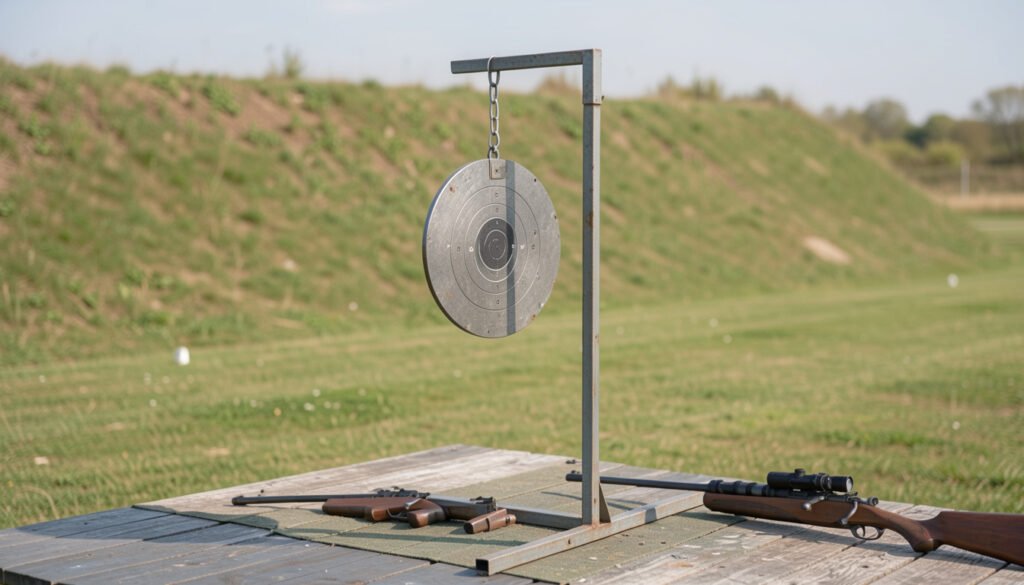
Steel gives you a loud ring or visible swing when you hit, which is satisfying and useful at longer distances. You know right away whether you connected, with no walk downrange.
For rifles, steel needs to be hardened plate rated for rifle velocities. Manufacturers commonly recommend at least 3/8-inch thick, abrasion-resistant plate of about 500 Brinell hardness for rifle shooting, but ratings differ by product. Always follow the maker’s specifications.
Self-Healing Polymer Targets
These are dense rubber-like targets that close up after a bullet passes through. They are weather resistant and can take a lot of rounds. That makes them good for people who shoot often and do not want to keep replacing targets.
Silhouette and Reactive Targets
Silhouette targets mimic the shape of an animal or a person-sized outline and are common in competition and hunting practice. Reactive targets fall, spin, swing or reset when hit. They are fun and good for building speed once you are consistent.
Quick Comparison of Rifle Target Types
| Target type | Best for | Durability | Main drawback |
|---|---|---|---|
| Paper or cardboard | Beginners, sighting in, group testing | Low | Replaced often; needs a backer |
| Steel (rifle-rated) | Long-range feedback, steady practice | High | Needs distance and ammo limits; costs more |
| Self-healing polymer | High-volume sessions | High | Less precise feedback than paper |
| Silhouette | Hunting and competition practice | Varies by material | Not as good for measuring tiny groups |
| Reactive (fall, spin, reset) | Fun, speed and confidence | Varies | Not ideal for learning the basics |
How to Match Targets to Your Rifle and Goals
The right target depends on what you are trying to do. Start with your goal, then check your cartridge.
Match the Target to Your Cartridge
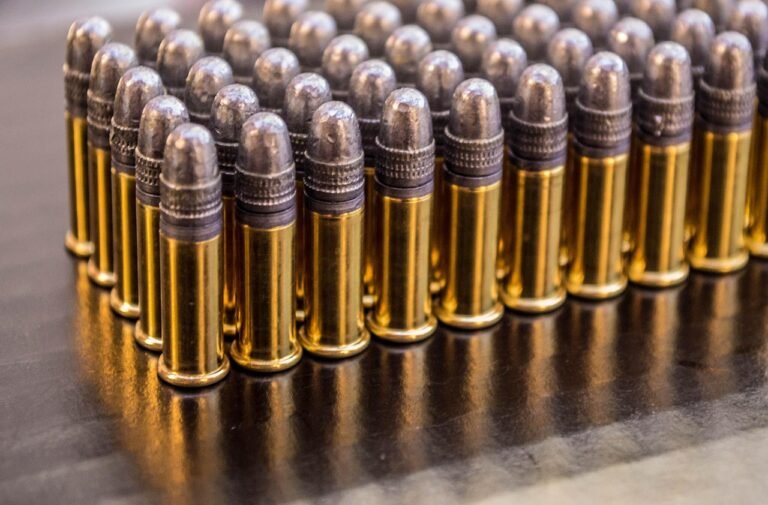
Low-powered rounds, such as the .22 Long Rifle, are easy on targets. Paper and some polymer targets handle them well. If you shoot a rimfire, our explainer on what a rimfire rifle is and how it is used covers the calibers involved.
Centerfire hunting and long-range rounds hit much harder. They shred paper quickly and can damage thin or soft steel. Use materials made for your cartridge, and check the target maker’s limits for bullet type and velocity.
Match the Target to Your Goal
- Sighting in: Use a paper target with a clear aiming point and a grid. See our steps for sighting in a rifle scope.
- Accuracy practice: Use small bullseyes or dot targets and shoot careful groups.
- Hunting practice: Use animal-shaped or vital-zone targets, ideally from field positions.
- Long-range shooting: Use steel so you can see and hear your hits without a spotting scope every shot.
- Casual fun: Use reactive targets, or safe items allowed by your range.
Pro tip: Start every session with a paper target to confirm your zero, then switch to steel or reactive targets for fun.
Set Up Your Rifle Targets Safely
Safety matters more than the target you pick. Treat every rifle as loaded, keep the muzzle in a safe direction and keep your finger off the trigger until you are on target and ready to shoot. Unload and verify the rifle is clear before you go downrange.

Check Your Backstop and Surroundings
- Use a solid backstop, such as an earthen berm, that can stop your rounds.
- Know what is beyond your target. A bullet that misses must have somewhere safe to go.
- Never shoot at hard, irregular objects like rocks or glass. They can cause ricochets and fragments.
Follow Steel Target Rules
- Use steel rated for rifle calibers, and never use pistol-rated steel with rifle rounds.
- Keep at least the minimum distance the manufacturer recommends. Closer shots increase the chance of fragments flying back.
- Use only the ammunition types the maker allows. Steel-core and armor-piercing rounds are commonly prohibited and can damage targets.
- Replace or retire plates that are pitted, cratered or dented.
- Wear eye and ear protection, and make sure anyone nearby does too.
Follow Range and Land Rules
Many ranges restrict steel, exploding targets, glass or certain ammunition. On public land, rules can also limit what you may shoot at. Check with the range officer or the managing agency before you set up, and confirm local regulations through official sources.
Get the Most From Each Target
Use a mix of targets and you will improve faster. A simple routine works well: confirm your zero on paper, run a few groups for accuracy, then finish on steel or polymer for fun and feedback.
Use the right size for your distance. A target that is too small to see clearly is frustrating, and one that is too big hides errors. If you are not sure where to start, begin at a modest distance and move back as your groups tighten. When you are ready to establish your zero, our guide to sighting in a rifle at 100 yards walks through it.
Frequently Asked Questions
What kind of targets are ideal for rifle shooting?
Stationary targets are ideal because they give you a consistent aiming point. Paper suits beginners and accuracy work, while steel and polymer suit durability and feedback. Choose based on your cartridge and your goal.
What is the best rifle target for beginners?
Paper targets are usually the best choice for beginners. They are inexpensive and show exactly where each shot lands. That helps you spot and fix mistakes in your technique.
Can you shoot steel targets with any rifle?
No. Steel must be rated for rifle velocities, and you must stay beyond the manufacturer’s minimum distance. Use only the ammunition types the maker allows, and check your range’s rules first.
What is the safest backstop for rifle targets?
A properly built earthen berm is a common and reliable backstop. It should be tall and wide enough to catch every round and free of rocks. Your target should also sit in front of it so any missed bullet goes into the dirt.
Conclusion
Stationary targets are the ideal choice for rifle shooting, especially while you build skill. Paper shows your accuracy, steel gives fast feedback, polymer lasts, and reactive and silhouette targets add variety. Pick what fits your cartridge and goals.
Keep safety first. Set up in front of a solid backstop, follow the range rules and respect the limits on steel targets. Gun and range rules vary by location, so confirm them with the range or your local authorities.
Start with paper, move on when your groups are consistent, and enjoy the progress at each step.