What Is a Recce Rifle? Meaning, Features and Uses Explained
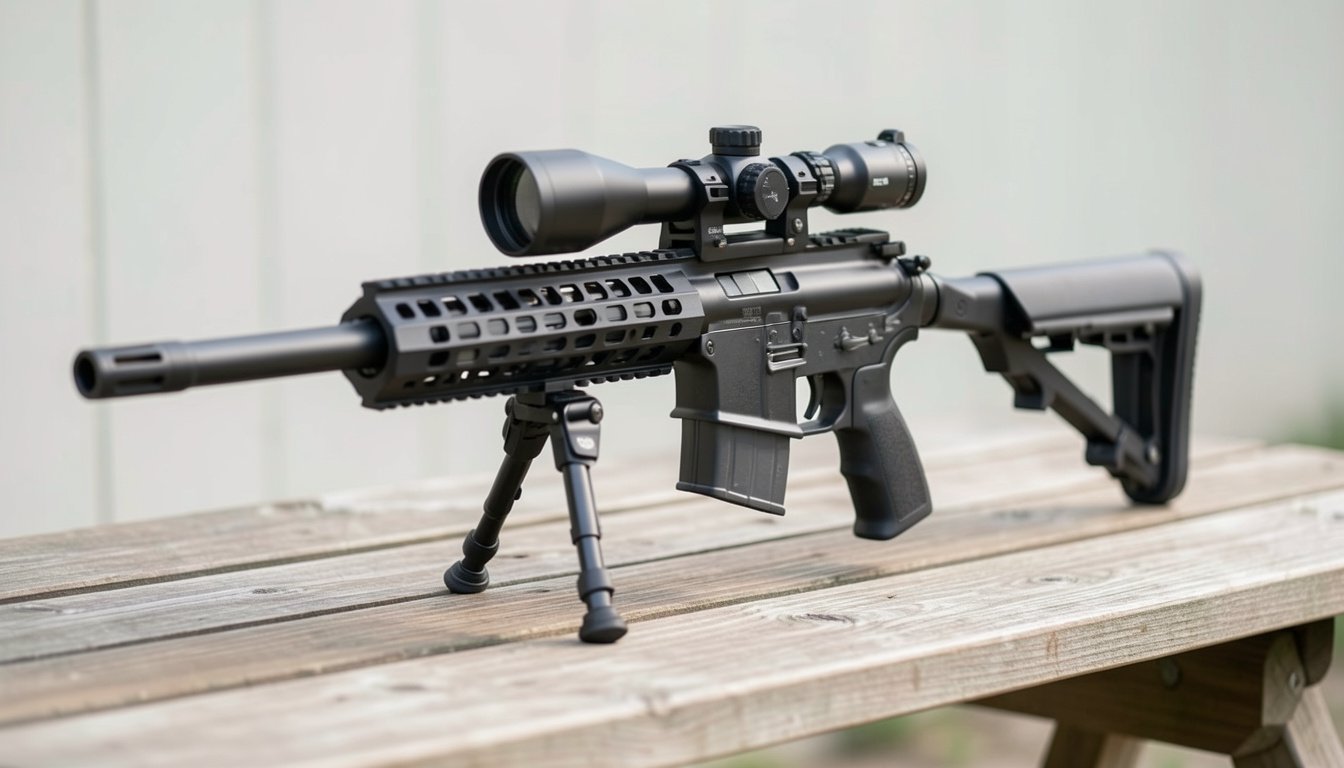
A recce rifle is a lightweight, accurate AR-style rifle that sits between a short carbine and a full-size precision rifle. It usually has a 16 to 18 inch barrel, a mid-length gas system and a magnified optic.
The word is not a model name or an official military designation. It describes a configuration concept, and “recce” is simply British slang for reconnaissance.
The idea grew out of special operations units that wanted a rifle that was handy like an M4 but could reach out farther. Today, civilians build and buy recce-style rifles for range work, training and general-purpose use.
Below you will learn where the idea came from, what parts define it, and how it compares with similar rifles.
Key Takeaways
- “Recce rifle” is a nickname for a concept, not a specific model, so there is no single official definition.
- Typical features are a 16 to 18 inch barrel, mid-length gas system, free-float handguard and a magnified optic.
- It was popularised by US special operations units, including Navy SEAL teams, as a lighter, handier alternative to a dedicated sniper or marksman rifle.
- It is usually chambered in 5.56 NATO or .223 Remington, which keeps weight and recoil low.
- Rules on rifle ownership and parts vary by location, so check your local laws before buying or building one.
What Is a Recce Rifle? The Short Answer
A recce rifle is best described as an accurized carbine with a magnified optic. It keeps the light weight and quick handling of a standard AR-15, but adds a longer, better barrel and a scope for precision at longer distances.
Because the term is informal, you will hear different opinions about what counts. Most people agree on the basics: a barrel in the 16 to 18 inch range, a rifle that stays light enough to carry all day, and an optic that lets you make accurate shots well past typical carbine distances.
If you are new to the carbine side of this, our guide on what a carbine rifle is covers the basics of that category.
Where the Recce Rifle Came From
The concept is generally traced to US Navy SEAL teams in the 1990s. Their snipers and recon teams wanted something lighter than a 7.62 NATO battle rifle but more precise and longer-reaching than a standard M4 carbine.
Armorers built rifles on the M4/M16 platform with heavier, more accurate barrels and magnified optics. These early builds fed into later military rifles such as the Mk 12 Special Purpose Rifle.
The rifles were mostly in-house builds, not a single issued item. That is why the term never became a formal military designation and why builds vary so much today.
Core Features of a Recce Rifle
Since there is no official spec sheet, think of these as the common ingredients. Each one serves the same goal: a light rifle that shoots accurately.
Barrel and Gas System
The barrel is usually 16 to 18 inches. That is slightly longer than the 14.5 inch barrel on a standard M4, which gives a little more velocity and a longer sight radius.
It is typically paired with a mid-length gas system. This suits the longer barrel, tends to run smoother and often reduces felt recoil. Many builds use a profile that is heavier than a pencil barrel for better accuracy, while staying lighter than a full bull barrel.
Twist rates of 1:7 and 1:8 are common, as they stabilise a wide range of 5.56 bullet weights.
Free-Float Handguard
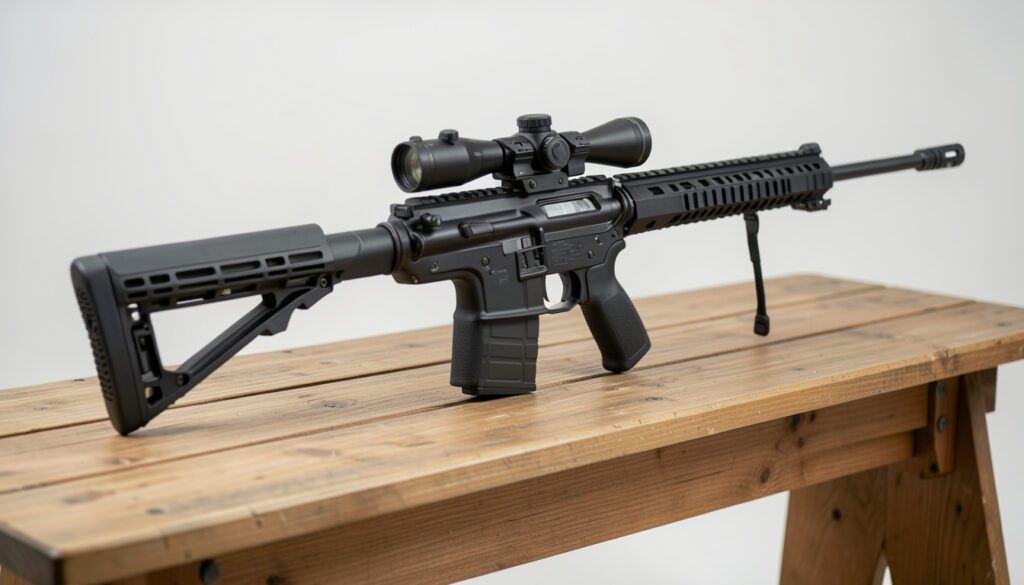
A free-floated handguard does not touch the barrel. This avoids pressure from a sling, bipod or barricade changing where the rifle shoots, which helps consistency.
Optic
The optic is what separates a recce rifle from a plain carbine. Common choices include:
- A low-power variable optic, often in the 1-6x to 1-10x range.
- A fixed-power scope for simplicity.
- A red dot paired with a flip-to-side magnifier.
Whatever you choose, it has to be mounted solidly and zeroed properly. Our step-by-step guides on how to sight in a rifle scope will help you do that.
Other Common Parts
- A quality trigger for cleaner shots.
- A light, adjustable stock and a practical sling.
- An optional bipod for supported shooting.
- A muzzle device suited to your needs.
Recce Rifle vs M4, SPR and DMR
People often mix these up because they overlap. The table below gives a quick, general comparison. Specific rifles and builds vary, so treat it as a guide.
| Rifle type | Typical barrel | Typical caliber | Main focus |
|---|---|---|---|
| Standard M4 carbine | 14.5 inches | 5.56 NATO | Compact, fast handling |
| Recce-style rifle | 16 to 18 inches | 5.56 NATO / .223 Rem | Balance of weight and precision |
| SPR-style rifle (such as the Mk 12) | About 18 inches | 5.56 NATO | Accuracy at longer range |
| 7.62 battle rifle / DMR (such as the Mk 14) | Often 18 inches or longer | 7.62x51mm NATO | Power and reach, with more weight |
In short, a recce rifle is lighter and quicker than a battle rifle in 7.62 NATO. It is more precise than a basic carbine. A true SPR or DMR usually trades some weight and handling for extra accuracy and reach.
Pro tip: Decide what you will use the rifle for first, then choose the optic and barrel to match, rather than copying a famous parts list.
What a Recce Rifle Is Good For
A recce-style rifle is a flexible tool. It will not beat a purpose-built rifle at any one job, but it handles many jobs well.
- Range and target shooting: Good accuracy out to a few hundred yards with common 5.56 ammunition.
- Training and classes: Light weight makes it easy to carry through long days.
- Varmint and predator control: Where legal and where the caliber is permitted, a precise 5.56 can suit small game and pests.
- Home or property use: The magnified optic can be less ideal up close, so many owners choose a 1-6x style variable optic.
For big game hunting, check your local regulations. Many areas set minimum caliber or energy requirements, and 5.56 may not meet them.
How to Choose or Build a Recce-Style Rifle
You can buy a complete rifle sold as a “recce” or build one from parts. A complete rifle is simpler and comes with a warranty. A build lets you pick each component.
- Set a budget. The optic can cost as much as the rifle, so plan for both.
- Choose the barrel. Look for a 16 to 18 inch barrel from a reputable maker, with a mid-length gas system.
- Pick a handguard and optic. Match the optic to the distances you actually shoot.
- Test different ammunition. Rifles can be picky, and good ammo makes a visible difference.
- Zero and practice. Learn your holdovers and build solid fundamentals.
If you assemble a rifle yourself, follow the manufacturer’s instructions. For anything beyond basic assembly, such as headspacing or barrel installation, use a qualified gunsmith.
Safety and Legal Notes
Treat every rifle as loaded. Keep the muzzle in a safe direction and your finger off the trigger until you are ready to shoot. Always unload and verify the chamber is empty before you work on or clean your rifle.
Good fundamentals also matter for accuracy. Our guide on how to hold a rifle correctly is a useful starting point.
Laws on semi-automatic rifles, barrel length, magazines and building your own rifle vary by location and change over time. Confirm the current rules with official sources such as the ATF, your state or national agency, local law enforcement, or a qualified attorney before you buy or build.
Frequently Asked Questions
What does recce mean in a rifle?
Recce is short for reconnaissance, and it comes from British slang. In rifle terms, it refers to a light, accurate rifle in the style of those used by recon-minded special operations units.
Is a recce rifle the same as a DMR?
Not exactly. A DMR (designated marksman rifle) is built for precision at longer range and is often heavier. A recce rifle puts more weight on being light and versatile, although the two ideas overlap.
What caliber is a recce rifle?
Most are chambered in 5.56 NATO or .223 Remington. These cartridges offer light recoil, a lighter rifle and widely available ammunition. Check your rifle’s markings before choosing ammunition.
Is a recce rifle good for beginners?
It can be, because AR-pattern rifles are easy to adjust and the 5.56 cartridge is mild. A magnified optic adds cost and a learning curve, so some beginners start with a simple red dot or low-power scope before adding more.
Conclusion
A recce rifle is a practical idea more than a product. Take a light AR carbine, add a better 16 to 18 inch barrel, a mid-length gas system and a magnified optic, and you have a rifle that is quick to handle and accurate out to useful distances.
Because there is no official definition, focus on how you will use the rifle rather than whether it is a “true” recce. Choose quality parts, pick an optic you can zero and trust, and practise regularly. Follow the safety rules and check your local laws, and you will end up with a capable all-round rifle.