How Rifle Bullets Differ From Shotgun Pellets Explained
A rifle bullet is one solid projectile shaped for accuracy and distance. A shotgun fires a payload of many small pellets that spread out into a pattern as they travel.
That single difference drives almost everything else. It changes how the ammunition is built, how the barrel is made, how far the projectile can go, and what you can safely and ethically shoot with it.
The details matter if you are choosing a first gun, picking hunting ammo, or just trying to understand what is inside the cartridge. Shotguns can also fire a single heavy slug, which blurs the line a little.
Below you will find a clear side-by-side breakdown of bullets and pellets, with the safety points that go with each.
Key Takeaways
- A rifle cartridge holds one bullet. A standard shotshell holds many pellets, called shot.
- Rifle bullets are streamlined and spin-stabilized by a rifled barrel, so they stay accurate at long range.
- Shotgun pellets are usually round and travel in a spreading pattern, which makes them best at short range and on moving targets.
- Shotgun slugs are single projectiles, but they still carry less range and precision than a rifle bullet.
- Always match the ammunition to the gun and check local hunting and range rules before you shoot.
How Rifle Bullets Differ From Shotgun Pellets: The Short Answer
Think of a rifle bullet as a spear and shotgun shot as a handful of thrown gravel. The spear goes to one spot. The gravel covers an area.
A rifle shot depends on putting that one bullet in exactly the right place. A shotgun shot depends on enough pellets from the pattern reaching the target. That is why rifles are talked about in terms of precision and shotguns in terms of pattern density.
Both rely on the same basic idea: a primer ignites powder, and expanding gas pushes the projectile down the barrel. The projectile design, the barrel, and the intended job are what set them apart.
Compare Shape, Size and Construction
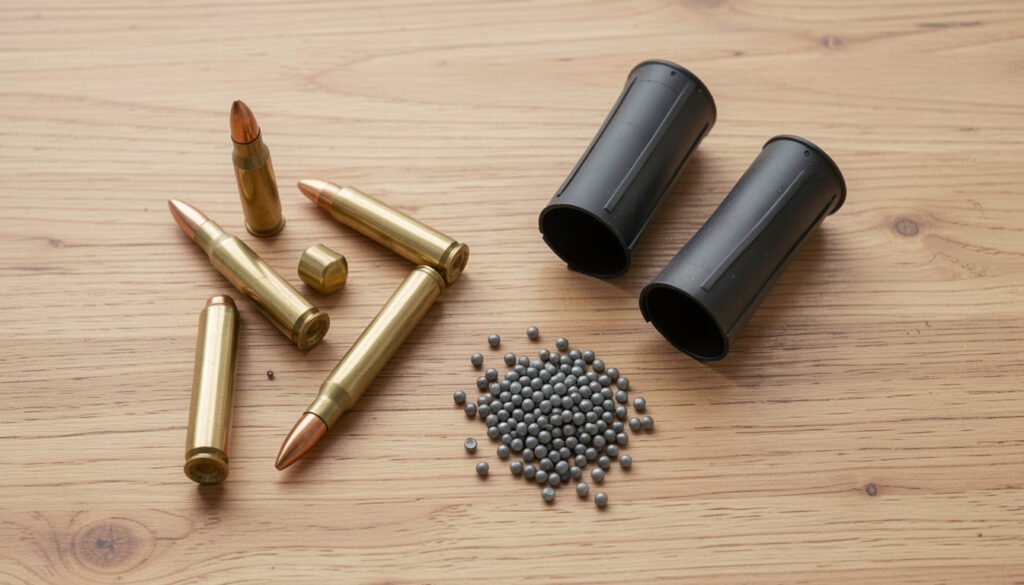
Rifle bullets
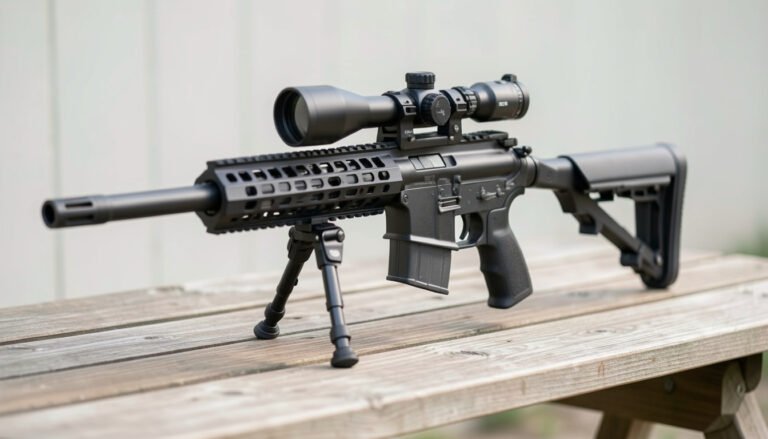
Rifle bullets are long, narrow and usually pointed or gently tapered. Most have a soft lead core wrapped in a harder copper jacket, though solid copper and other designs exist. The bullet is crimped into a metal case that also holds the powder and primer.
The long shape cuts through the air with little drag. It also holds its speed and energy far better than a small round ball can.
Shotgun pellets
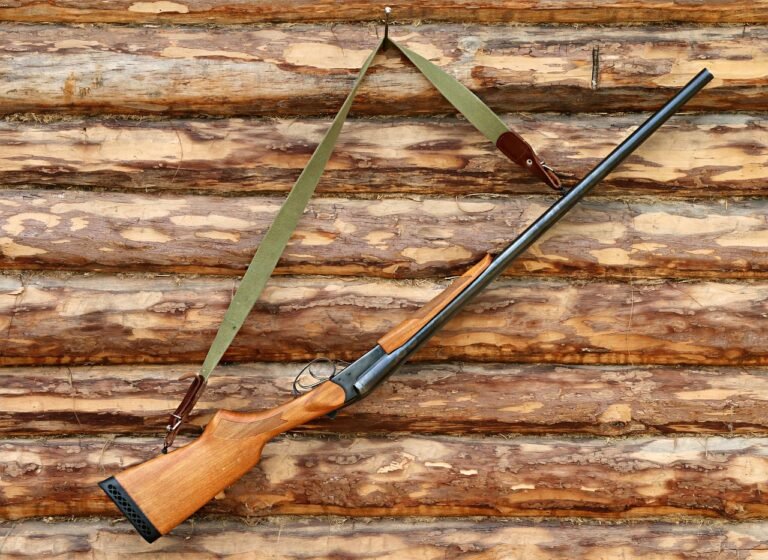
Shotgun pellets are tiny spheres. A shotshell typically has a plastic hull with a brass or plated base, powder, a plastic wad, and a load of shot packed inside. Lead is the traditional material, but steel, bismuth, tungsten blends and other non-toxic options are common.
Shot comes in many sizes. Small birdshot pellets are about the size of poppy seeds to peas, while buckshot pellets are much larger, around the diameter of a pea or bigger. A single shell can hold anywhere from a handful of large pellets to hundreds of tiny ones.
Understand the Barrel: Rifling vs. Smoothbore
A rifle barrel has spiral grooves cut into the bore. These rifling grooves make the bullet spin, which keeps it stable in flight, much like a well-thrown football.
Most shotguns have a smoothbore barrel with no rifling. Round pellets do not need spin to stay stable, and spin would actually push the shot cloud apart in uneven ways.
Shotguns often use a choke, a constriction at the muzzle that tightens or loosens the pattern. A tighter choke keeps pellets grouped farther out. A more open choke spreads them sooner for close targets. Gauge, shell length, choke and distance all affect the final pattern.
If you want to learn how rifle accuracy is set up once you own one, see this guide on how to sight in a rifle for a 100-yard zero.
Look at Range, Speed and Accuracy
Rifle bullets are built for distance. Many common rifle cartridges push a bullet at well over 2,000 feet per second, and a good rifle with a good scope can place shots accurately at several hundred yards. A bullet can also travel a very long way if it misses, so you must always know your target and what is behind it.
Shotgun pellets are slower and lose speed quickly because they are small, round and light. Most birdshot work happens inside roughly 40 yards. Beyond that, the pattern thins out and the pellets lose energy.
Accuracy means something different for each. With a rifle, you aim at a precise point and the bullet goes there. With a shotgun, you point at the target and the spreading cloud of pellets does the work. That is why shotguns suit fast, flying and moving targets.
Use the Right Projectile for the Job
| Feature | Rifle bullet | Shotgun pellets (shot) |
|---|---|---|
| Number per shot | One | Many, from a few to hundreds |
| Shape | Long, pointed, streamlined | Small round balls |
| Barrel | Rifled | Usually smoothbore, often choked |
| Typical range | Hundreds of yards | Short, often under 50 yards |
| Aim style | Precise point of aim | Pattern covers an area |
| Common uses | Target shooting, big game, varmints | Birds, clay targets, small game, home use |
Rifles are the usual choice for target shooting and for hunting deer-sized game and larger, or for small animals at distance. Shotguns are the standard for upland birds, waterfowl, clay sports and many small-game hunts. If you want a smaller, lighter rifle for plinking, check out this explainer on what a rimfire rifle is and how it is used.
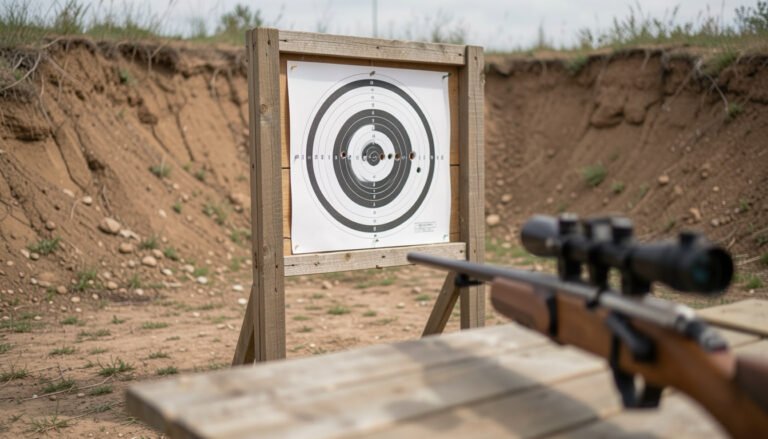
Pro tip: Pattern your shotgun at a paper target with the exact shells you plan to use, because every gun and load combination spreads a little differently.
Know Where Shotgun Slugs Fit In

A slug is a single, heavy projectile fired from a shotgun. It looks and acts more like a bullet than shot, and it is used for medium and large game at short range. Slugs are typically heavier than rifle bullets, but they are slower and drop faster.
There are two main types:
- Rifled slugs: Soft lead slugs with grooves molded into the outside, meant for smoothbore barrels.
- Sabot slugs: Narrow, bullet-shaped projectiles held in a plastic sleeve. They are designed for rifled shotgun barrels and give better accuracy.
Some areas restrict hunters to shotguns firing slugs, or to certain barrel types, for big game. A rifle still offers greater range and precision. If you are comparing compact rifle types, you may also want to read what a carbine rifle is.
Follow Safety and Legal Basics
Whatever you shoot, the core rules stay the same. Treat every gun as loaded. Keep the muzzle pointed in a safe direction. Keep your finger off the trigger until you are ready to fire. Unload and verify the chamber is empty before any cleaning or maintenance.
- Match ammo to the gun. Read the markings on the barrel or receiver. For shotguns, confirm gauge and chamber length. Never load a shell that is the wrong size.
- Check slug and choke guidance. Some chokes are not rated for slugs or steel shot. Look at your manufacturer’s manual first.
- Mind the backstop. Rifle bullets can carry a very long distance and penetrate deeply. Shot is less far-reaching but can still cause serious injury.
- Use proper protection. Wear eye and ear protection with both.
- Confirm local rules. Non-lead shot is required in many places for waterfowl, and hunting regulations on legal ammunition and equipment vary. Check with your state or local wildlife agency, or the relevant authority where you live.
Good handling habits matter just as much as ammo choice. If you are new to rifles, this walkthrough on how to hold a rifle correctly is a useful next read.
Frequently Asked Questions
Can a shotgun fire a single bullet like a rifle?
Yes, a shotgun can fire a slug, which is a single large projectile. It is accurate enough for short-range hunting, but it does not match the range or precision of a rifle bullet. Always use slugs that suit your barrel and choke.
Which is more dangerous, a rifle bullet or shotgun pellets?
Both can cause fatal injuries. Rifle bullets carry more speed and energy and travel farther, while shotgun pellets cause wide damage at close range. Treat both with the same level of care.
Why do shotgun pellets spread out?
Pellets leave the muzzle as a tight group, but they are small, round and travel through the air at slightly different speeds and paths. They bump into each other and into the wad, which causes the group to open up. Choke and distance control how quickly it widens.
Can you shoot a rifle bullet through a shotgun?
No. Rifle cartridges and shotgun shells are made for different guns, with different chamber and bore dimensions and pressure levels. Never try to use ammunition that is not specifically made for your firearm.
Conclusion
Rifle bullets and shotgun pellets solve different problems. A bullet is one streamlined projectile sent down a rifled barrel for precision at distance. Pellets are many small balls from a smoothbore barrel that form a pattern for close or moving targets.
Slugs sit in between, giving a shotgun single-projectile power at limited range. Once you know the differences, choosing ammunition and the right gun for your use gets much easier.
Match the ammo to the gun, follow your local rules, and keep the basic safety rules in mind every time you handle a firearm. That is the surest way to shoot well and stay safe.