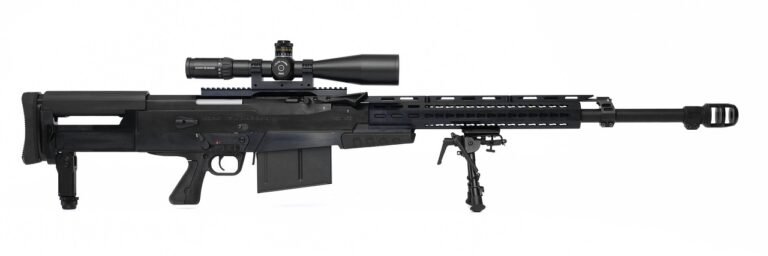
What Is a DMR Rifle? Designated Marksman Rifle Explained
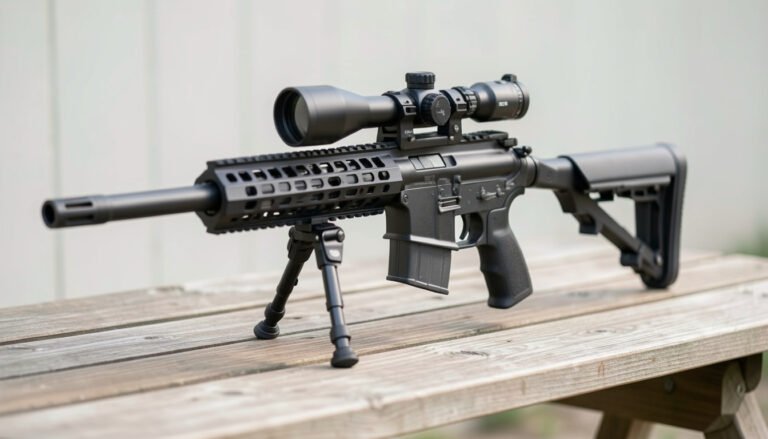
A DMR rifle is a designated marksman rifle. It is a semi-automatic, scoped, accuracy-focused rifle that reaches farther than a standard service rifle but is not a dedicated sniper system.
The term comes from the military. A designated marksman is a soldier who carries a more precise rifle to hit targets beyond the normal range of the rest of the squad.
Today, “DMR” is also used by civilians. It usually describes a semi-automatic rifle with a quality barrel, a magnified optic and often a bipod. Many people build or buy them for range days, competition and hunting.
The label is a role and a configuration, not one specific gun. That is why you will see very different rifles called DMRs.
Keep reading to see how a DMR is built, how it compares with other rifles and what to check before you buy one.
Key Takeaways
- DMR stands for designated marksman rifle. It is a semi-automatic, scoped rifle built for accurate fire at medium to long range.
- A DMR sits between a standard rifle or carbine and a bolt-action sniper rifle. It trades some ultimate precision for faster follow-up shots.
- Typical features are a quality barrel, a good trigger, a variable-power optic and a bipod.
- DMRs are commonly chambered in 5.56 NATO, 7.62×51 NATO or .308 Winchester, and the platform is often AR-style or M14-style.
- Civilian “DMR-style” rifles are legal in many places, but laws vary. Check the rules where you live before you buy or build.
What Is a DMR Rifle?
DMR stands for designated marksman rifle. Militaries developed the idea when they saw a gap in capability. Standard infantry rifles are built for close to medium range and fast handling. Sniper rifles are built for extreme precision but are slow to use and are usually operated by specialist teams.
The designated marksman fills the middle. This shooter stays with the squad, engages targets at longer distances than the others can, and can still fire quickly if needed.
Most DMRs are based on a rifle that a military already uses, or one it used in the past. Often the main changes are a better optic, a more accurate barrel and a better trigger. Sometimes the optic is the only real difference from the standard rifle.
The Typical Role
DMRs are usually discussed in the range of roughly 300 to 600 meters. That is about 330 to 650 yards. Exact numbers vary by rifle, cartridge, ammunition and shooter skill, so treat them as a rough guide.
Real-World Examples
- Mk 12 Special Purpose Rifle: a 5.56 NATO AR-pattern rifle with an 18-inch barrel and a magnified optic.
- Mk 14 Enhanced Battle Rifle: an M14-based rifle in 7.62×51 NATO.
- M110A1 Squad Designated Marksman Rifle: a 7.62 NATO rifle based on the HK417 platform.
How a DMR Differs From a Sniper Rifle and Battle Rifle
People often mix these terms up. The simplest way to separate them is by purpose. A DMR is built for speed and accuracy together. A sniper rifle is built for maximum precision and range. A battle rifle is built for power and durability.
| Feature | Standard Rifle / Carbine | DMR | Sniper Rifle |
|---|---|---|---|
| Action | Semi-auto (sometimes select-fire in military use) | Usually semi-auto | Usually bolt-action |
| Typical optic | Red dot or low-power scope | Variable-power scope | High-power scope |
| Typical range | Short to medium | Medium to long | Long to extreme |
| Magazine | 20 to 30 rounds common | 10 to 30 rounds | Often 5 to 10 rounds |
| Main strength | Handling and speed | Fast, accurate follow-up shots | Peak precision |
If you want a refresher on the shorter end of the scale, see this guide on what a carbine rifle is. A carbine is the opposite design goal: compact and quick rather than precise at distance.
Key Features of a DMR Rifle
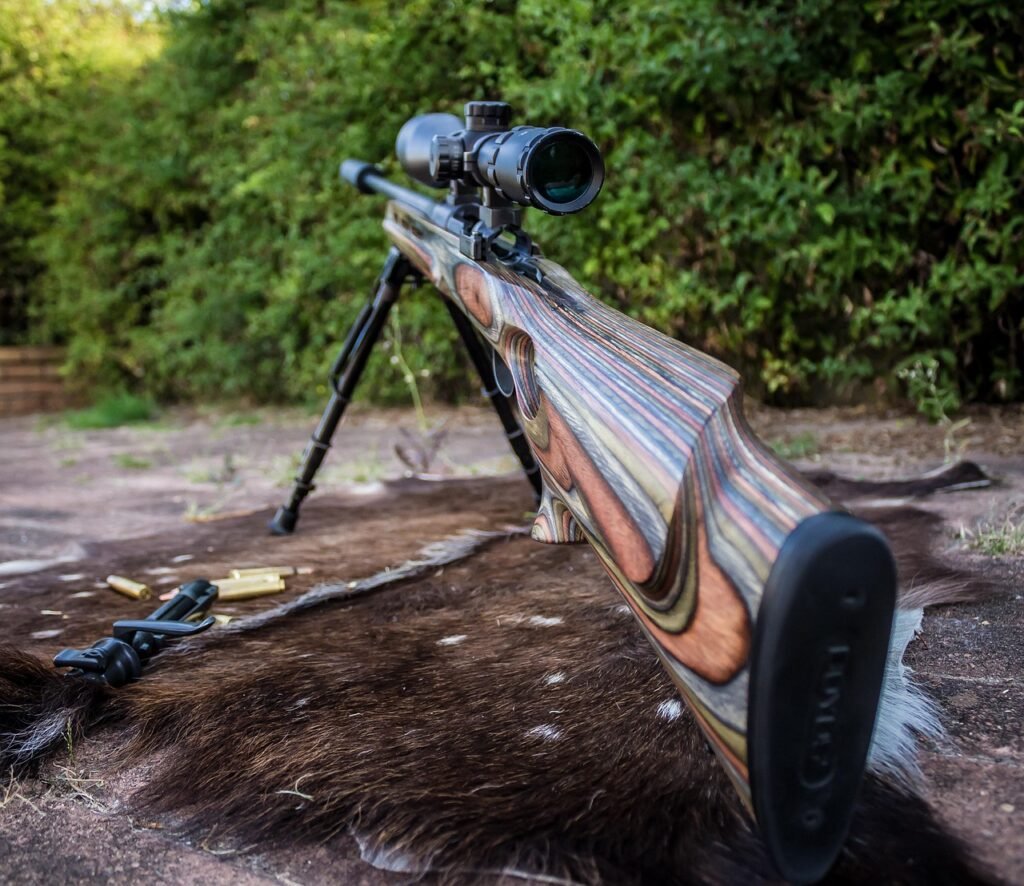
No single spec makes a rifle a DMR. Most share a few traits that support accurate shooting at distance.
Semi-Automatic Action
Semi-auto fire lets you take quick follow-up shots without working a bolt. This is the main advantage over a bolt-action sniper rifle. It helps when you have several targets or a target that moves or changes.
Accurate Barrel
DMR barrels are often heavier or higher quality than standard ones. A good barrel holds accuracy as it heats up during longer strings of fire. Length varies. Many civilian builds use a barrel of about 16 to 20 inches, which balances velocity and handling.
Magnified Optic
A variable-power scope is the most visible DMR feature. Common ranges are low-power variable optics for flexibility up to higher magnification for precision. A scope needs a proper zero to be useful, so learn how to sight in a rifle scope before you judge the rifle’s accuracy.
Good Trigger
A clean, crisp trigger makes precise shots easier. Many DMR builds replace a standard military-style trigger with a better one. Take care with trigger work. If you are not experienced, have a qualified gunsmith do it.
Bipod and Adjustable Stock
A bipod steadies the rifle from a prone position. An adjustable stock lets you fit the rifle to your body, which matters when you shoot behind a scope for long periods.
Common DMR Calibers and Platforms
Most DMRs use full-power or intermediate rifle cartridges. The choice is a trade-off between range, recoil, weight and ammunition cost.
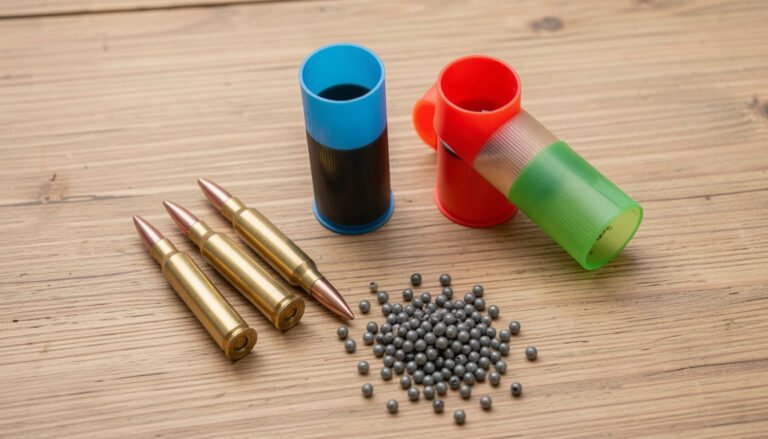
- 5.56×45 NATO / .223 Remington: Light recoil, lighter rifles and cheaper ammo. Good for shooters who want a flat, easy-handling setup.
- 7.62×51 NATO / .308 Winchester: More energy and better performance at longer range and in wind. The rifles and ammo are heavier and cost more.
- 6.5 mm and similar modern cartridges: Popular with civilian shooters who want flatter trajectories. These are not traditional military DMR rounds, but they fit the concept.
Common platforms include AR-15 and AR-10 style rifles, M1A and M14-style rifles, and HK-style designs. Each has its own weight, price and aftermarket support. Always buy ammunition that matches the caliber stamped on your barrel.
Pro tip: Spend your budget on a quality optic, a good mount and consistent ammunition before you spend it on cosmetic upgrades.
Can You Own a DMR Rifle as a Civilian?
In many places, yes. Civilians generally buy semi-automatic rifles and configure them in a DMR style. They cannot normally get military select-fire versions without meeting strict legal requirements.
Laws vary a lot. Some jurisdictions restrict certain semi-automatic rifles, magazine capacity, features or barrel length. Rules also change over time. Before you buy or build, confirm what applies to you through official sources such as the ATF, your state or national firearms agency or local law enforcement. For anything complicated, talk to a qualified attorney.
Many shooters also ask about hunting. A DMR-style rifle in a suitable caliber can work well for hunting game such as deer or hogs. Check that your cartridge is legal for the animal and that semi-auto rifles are permitted for hunting where you are.
How to Shoot a DMR Rifle Accurately
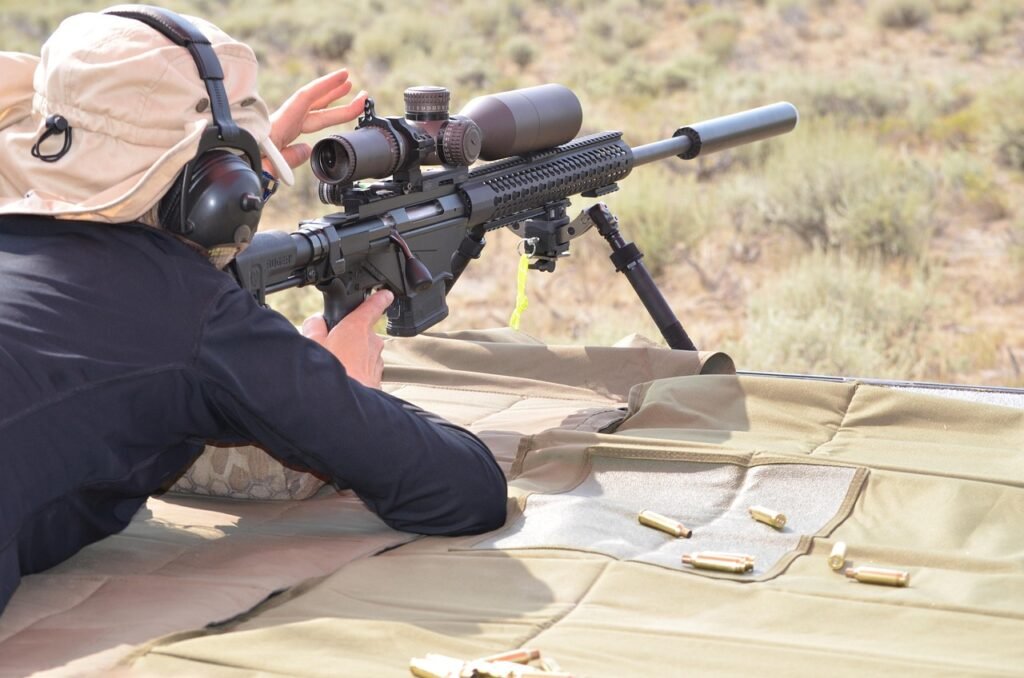
A good DMR rewards good fundamentals. Start with safety, then build accuracy.
Safety First
- Treat every rifle as loaded.
- Keep the muzzle pointed in a safe direction.
- Keep your finger off the trigger until your sights are on the target and you have decided to shoot.
- Be sure of your target and what is behind it, especially at long range.
- Unload and verify the chamber is empty before you clean, adjust or store the rifle.
Accuracy Basics
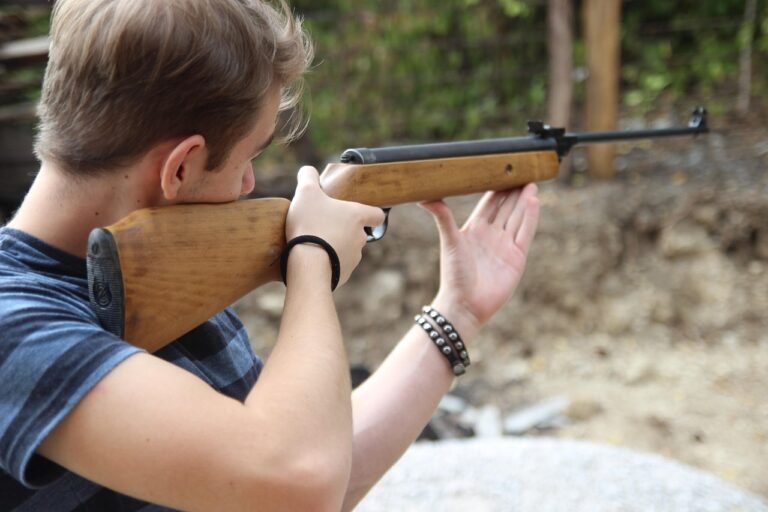
- Build a stable position. Use a bipod, a rest or a sling. Review how to hold a rifle correctly to improve your grip, cheek weld and stance.
- Zero the rifle. Confirm your zero at a known distance, then check it at longer range.
- Know your drops. Learn how far your bullet falls at 200, 300 and 400 yards with your specific ammunition.
- Control the trigger. Press smoothly without jerking the rifle.
- Use the same ammo. Consistent loads give consistent groups.
Semi-auto rifles can shift point of impact slightly as they heat up. Let the barrel cool between strings when you are testing accuracy.
Frequently Asked Questions
What does DMR stand for?
DMR stands for designated marksman rifle. It describes a rifle used by a designated marksman, a shooter who engages targets at longer ranges than standard riflemen. The term is also used for civilian rifles configured in a similar style.
Is a DMR the same as a sniper rifle?
No. A DMR is usually semi-automatic and is meant to support a squad with quick, accurate shots at medium to long range. A sniper rifle is usually bolt-action and is designed for maximum precision at greater distances.
What caliber is a DMR?
There is no single DMR caliber. The most common are 5.56 NATO, 7.62×51 NATO and .308 Winchester. Some civilian DMR-style rifles use modern cartridges such as 6.5 mm for flatter trajectories.
How far can a DMR shoot accurately?
Typical DMR use is in the range of about 300 to 600 meters. Actual performance depends on the cartridge, barrel, optic, ammunition and shooter. Practice at known distances to learn your own rifle’s limits.
Conclusion
A DMR rifle is a semi-automatic, scoped, accuracy-focused rifle that fills the gap between a standard rifle and a sniper rifle. It is defined by its role and its setup, not by one brand or model. A good barrel, trigger, optic and bipod matter more than the label.
If you are thinking of getting one, decide what you will use it for first. Pick a caliber that suits your range and budget, check your local laws through official sources and learn the fundamentals of safe, steady shooting.
Start with a solid zero, practice from a stable position and your DMR will deliver what it was designed for: accurate, repeatable shots.