What Does the Action in a Rifle Do? Types and Functions
The action in a rifle is the mechanism that handles the ammunition. It loads, locks, fires, extracts and ejects each cartridge. Everything between pulling the trigger and being ready for the next shot happens in the action.
Think of the barrel as the part that sends the bullet downrange. The action is the machinery behind it. It sits in the receiver and is what separates a bolt-action from a lever-action or a semi-auto.
Knowing how your action works helps you shoot more safely, clean the rifle properly and pick the right gun for hunting, target work or plinking. It also helps you make sense of the terms you hear at the range and in gun shops.
Below you will find the jobs an action performs, its main parts, the common action types and how to choose between them.
Key Takeaways
- The action loads a cartridge, locks it in the chamber, fires it, then extracts and ejects the empty case.
- The action type (bolt, lever, pump, single-shot or semi-auto) decides how you load and reload and how fast you can shoot.
- Bolt actions are known for accuracy and simplicity. Semi-autos are known for speed and lower felt recoil.
- Pick an action based on how you will use the rifle, not on looks or tradition alone.
- Always unload and verify the chamber is empty before you handle, clean or work any action.
What Does the Action in a Rifle Do?
The action runs a repeating sequence often called the cycle of operation. Every rifle action performs the same basic jobs, even though the way you or the rifle moves the parts differs.
- Feeding: A cartridge moves from the magazine, or from your hand in a single-shot, toward the chamber.
- Chambering: The cartridge is pushed fully into the chamber at the back of the barrel.
- Locking: The bolt or breech block locks closed so the case is supported when the powder burns. This keeps pressure contained and the rifle safe to fire.
- Firing: When you pull the trigger, a striker or firing pin hits the cartridge primer. A firing pin is sprung into the primer when the trigger is pulled.
- Extracting: After the shot, the action unlocks and pulls the spent case out of the chamber.
- Ejecting: The empty case is thrown clear of the rifle so a new round can take its place.
On a repeating rifle the action then feeds a fresh round and cocks the firing mechanism again. In a bolt-action, working the bolt also cocks the striker or firing pin, either as you open or as you close it.
Main Parts of a Rifle Action
Designs vary, but most actions share a handful of parts. Knowing them makes manuals and cleaning guides much easier to follow.
- Receiver: The housing that holds the moving parts together. The barrel and stock attach to it.
- Bolt or breech block: Pushes the round into the chamber and locks behind it.
- Firing pin or striker: Strikes the primer to start ignition.
- Trigger and sear: The trigger releases the sear, which in turn releases the hammer or striker.
- Extractor and ejector: Pull the empty case from the chamber and throw it clear.
- Magazine and feed path: Hold the cartridges and guide them toward the chamber.
Some people use “action” loosely to mean the receiver. Strictly, it covers the working parts too. In everyday talk, both uses are common.
Types of Rifle Actions Explained
Actions fall into two broad groups. Manual actions need you to cycle the parts by hand. Self-loading actions use the energy of the shot to do it for you.
Bolt Action
You lift the bolt handle, pull it back, push it forward and turn it down. That motion ejects the spent casing, chambers a new round and locks the action. Bolt actions are popular for hunting and long-range shooting. They are prized for simplicity, robustness and precision.
Lever Action
A lever under the receiver, near the trigger, cycles the action. It moves the bolt through internal linkages, feeding and extracting cartridges and cocking the firing mechanism. Lever guns are fast to cycle and often carry rounds in a tubular magazine. They are classic choices for woods and brush hunting.
Pump Action
A pump action lets you work the bolt by sliding a mechanism attached to the forend. You slide it back to eject and forward to chamber. Pump rifles are less common than pump shotguns, but they exist and cycle quickly.
Single-Shot Actions
These hold one round at a time and have no magazine. The two main types are break-action and falling block. A break-action hinges open so you can remove the empty case and insert a fresh cartridge. Falling-block rifles use a lever under the receiver to drop the breech block. Single-shots are simple, light and strong.
Semi-Automatic Action
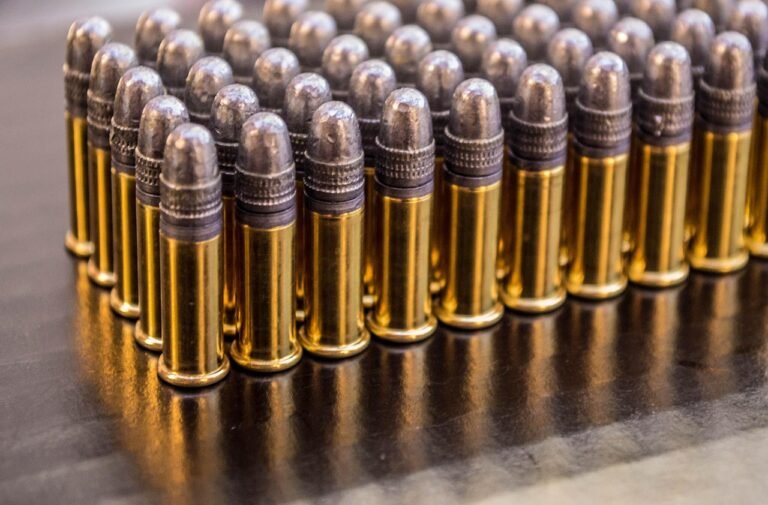
A semi-auto uses the energy of the fired cartridge to cycle the action and load a new round. You still pull the trigger once for each shot. The two common methods are blowback and gas operation. Blowback is the simplest, and it suits light ammunition like .22 Long Rifle but does not scale well to heavier-recoiling cartridges. Gas-operated rifles bleed off some gas from the barrel to drive the parts.
Rifle Actions Compared at a Glance
| Action | How it cycles | Main strength | Trade-off |
|---|---|---|---|
| Bolt | Manual, bolt handle | Accuracy, strength, simplicity | Slower follow-up shots |
| Lever | Manual, under-lever | Quick, handy, classic feel | Fewer scope-friendly options, often tubular magazine limits on bullet shape |
| Pump | Manual, sliding forend | Fast manual cycling | Fewer models available |
| Single-shot | Manual, one round at a time | Light, simple, rigid | Slow to reload |
| Semi-auto | Self-loading, gas or blowback | Fast follow-up shots, softer recoil | More parts, more cleaning |
How the Action Affects Accuracy, Speed and Reliability

The action does not aim the bullet, but it influences how well you can shoot. A rigid, well-fitted action holds the barrel and cartridge steady. That is one reason bolt actions and falling-block designs have a reputation for precision.
Speed depends on how the action cycles. Semi-autos give you the fastest follow-up shots. Lever and pump rifles are quick if you practice. Bolt guns take a moment longer, but many hunters value the deliberate pace.
Reliability comes from simple designs and clean, lightly lubricated parts. Fewer moving parts generally means fewer things that can fail. Dirt, rust and a weak spring or worn extractor are common causes of feeding and ejection problems.
Pro tip: Cycle your action slowly and smoothly with the rifle unloaded and the chamber visibly empty to learn how it feels before you ever go to the range.
Choosing the Right Rifle Action for Your Needs
Start with what you will do most. Match the action to the job, then think about budget and how much upkeep you want.
- Hunting big game at range: A bolt action is a common, dependable choice.
- Brush and timber hunting: A lever action is short, handy and quick to operate.
- Plinking and training: A semi-auto or bolt-action .22 is affordable and fun. Our guide to rimfire rifles, their types and uses covers the options.
- Home range use and short-range handling: A compact self-loader may suit you. See this plain-English look at what a carbine rifle is for how shorter rifles compare.
- Learning fundamentals: A simple bolt-action or single-shot slows you down and builds good habits.
Whichever you choose, handle the rifle in person if you can. Check that the controls fit your hands and that the action runs smoothly. Rules on buying, transporting and owning rifles vary by location, so confirm them with official sources such as the ATF, your state agency or local law enforcement.
Safety Rules When Working a Rifle Action
Handling the action means handling the rifle’s loading and firing parts, so the basic rules apply every time.
- Treat every rifle as if it is loaded, even after you have checked it.
- Keep the muzzle pointed in a safe direction at all times.
- Keep your finger off the trigger and outside the trigger guard until you are ready to shoot.
- Before cleaning or maintenance, remove the magazine, open the action, and visually and physically verify the chamber is empty.
- Know the safety mechanism on your rifle, but never rely on it in place of safe handling.
Basic cleaning and wiping down the action is fine for most owners. For worn parts, trigger work or anything inside the receiver beyond the manual’s instructions, see a qualified gunsmith. If you are new to shooting, our guide on how to hold a rifle correctly helps you pair good handling with good action control.
Frequently Asked Questions
What is the action of a rifle in simple terms?
It is the set of moving parts that loads, fires and unloads each cartridge. It sits behind the barrel, inside or around the receiver. The type of action decides how you operate the rifle.
Is the action the same as the receiver?
Not exactly. The receiver is the housing that holds the parts together, while the action includes the working parts inside it, such as the bolt and firing pin. Many people use the words almost interchangeably in casual conversation.
Which rifle action is the most common?
Bolt actions are among the most widely used, especially for hunting. They are made in chamberings from .22 Long Rifle up to very large cartridges. Semi-automatics are also very common.
Does the action affect accuracy?
Yes, to a degree. A stiff, well-built action helps keep the cartridge and barrel aligned. Barrel quality, ammunition, stock fit, the trigger and your own technique matter just as much, so see our guide to sighting in a rifle to get the most from any action.
Conclusion
The action is the part of a rifle that does the work: it feeds, chambers, locks, fires, extracts and ejects every round. How it does those jobs defines whether your rifle is a bolt, lever, pump, single-shot or semi-auto.
Each type has strengths. Bolt actions offer precision and simplicity, levers offer handiness, and semi-autos offer speed. Choose the one that fits your purpose, handle it often and keep it clean. With safe habits and a clear idea of how your action works, you will shoot with more confidence.