How to Hold a Rifle Correctly: 6 Easy Steps for Beginners
To hold a rifle correctly, seat the stock firmly in your shoulder pocket, grip the rifle with your trigger hand, and let your support hand steady the front. Keep your head up, rest your cheek on the stock, and keep your finger off the trigger until you are ready to shoot.
Good rifle hold is about consistency, not muscle. A solid, repeatable hold helps you control recoil, line up your sights, and shoot safely.
The details change a little between a bolt-action hunting rifle and a semi-auto with a pistol grip. The basics are the same for both, and you can learn them in one range session.
Below, you will find six simple steps, a few common mistakes, and answers to questions beginners ask most. Keep reading and you will be set up properly before your next trip to the range.
Key Takeaways
- Safety comes first. Treat every rifle as loaded, keep the muzzle pointed in a safe direction, and keep your finger off the trigger.
- The stock goes in your shoulder pocket, not on your collarbone or upper arm. A snug fit spreads recoil across your body.
- Hold firmly, but do not crush the rifle. A death grip adds tremor and can pull your shots off target.
- Your support hand carries the weight of the front end. Your trigger hand mostly controls the trigger and keeps the stock seated.
- Repeat the same hold every time. Consistency matters more than any one trick.
Step 1: Make the Rifle Safe Before You Pick It Up
Before you work on your hold, follow the basic safety rules. They apply every time you touch a rifle, even one you think is empty.
- Treat every gun as loaded. Open the action, remove the magazine, and visually check the chamber yourself.
- Point the muzzle in a safe direction. At a range, that means downrange. At home, pick a direction where a stray shot would do the least harm.
- Keep your finger off the trigger. Rest it straight along the side of the receiver until your sights are on target and you have decided to shoot.
- Know your target and what is behind it.
Practice your hold with an unloaded rifle first. This is called dry practice, and it is a safe way to build habits. Always verify that the rifle is unloaded and keep ammunition in another room.
Step 2: Set Your Stance
A stable body makes a stable rifle. For standing shooting, set your feet about shoulder-width apart. Angle your body slightly away from the target, with your support-side foot a little forward.
Some shooters prefer a more squared, athletic stance. It pushes your weight forward and helps you manage recoil. Either one works if it feels balanced and you can repeat it.
- Bend your knees slightly. Do not lock them.
- Lean a little toward the target, so your weight is on the balls of your feet.
- Keep your shoulders relaxed and your head up.
Other positions, such as sitting, kneeling, and prone, give you more support. For hunting or long-range shooting, the prone position is the most stable option because more of your body is in contact with the ground.
Step 3: Grip the Rifle With Your Trigger Hand
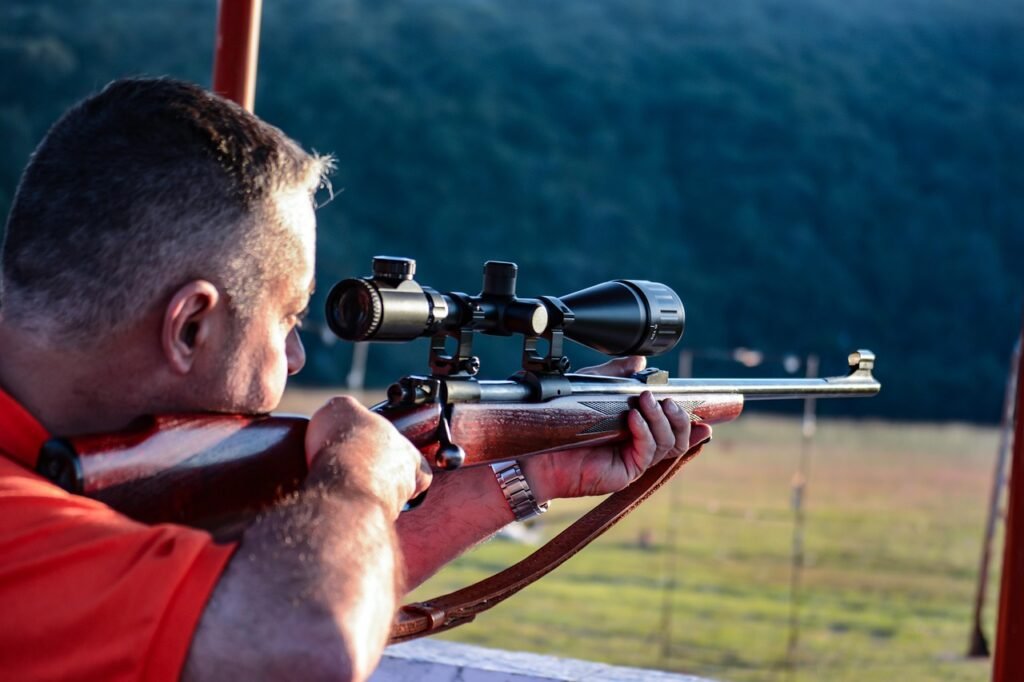
Your trigger hand is your shooting hand. It holds the rifle’s grip, or the narrow part of the stock behind the action, which is called the wrist or small of the stock.
Rifles With a Pistol Grip
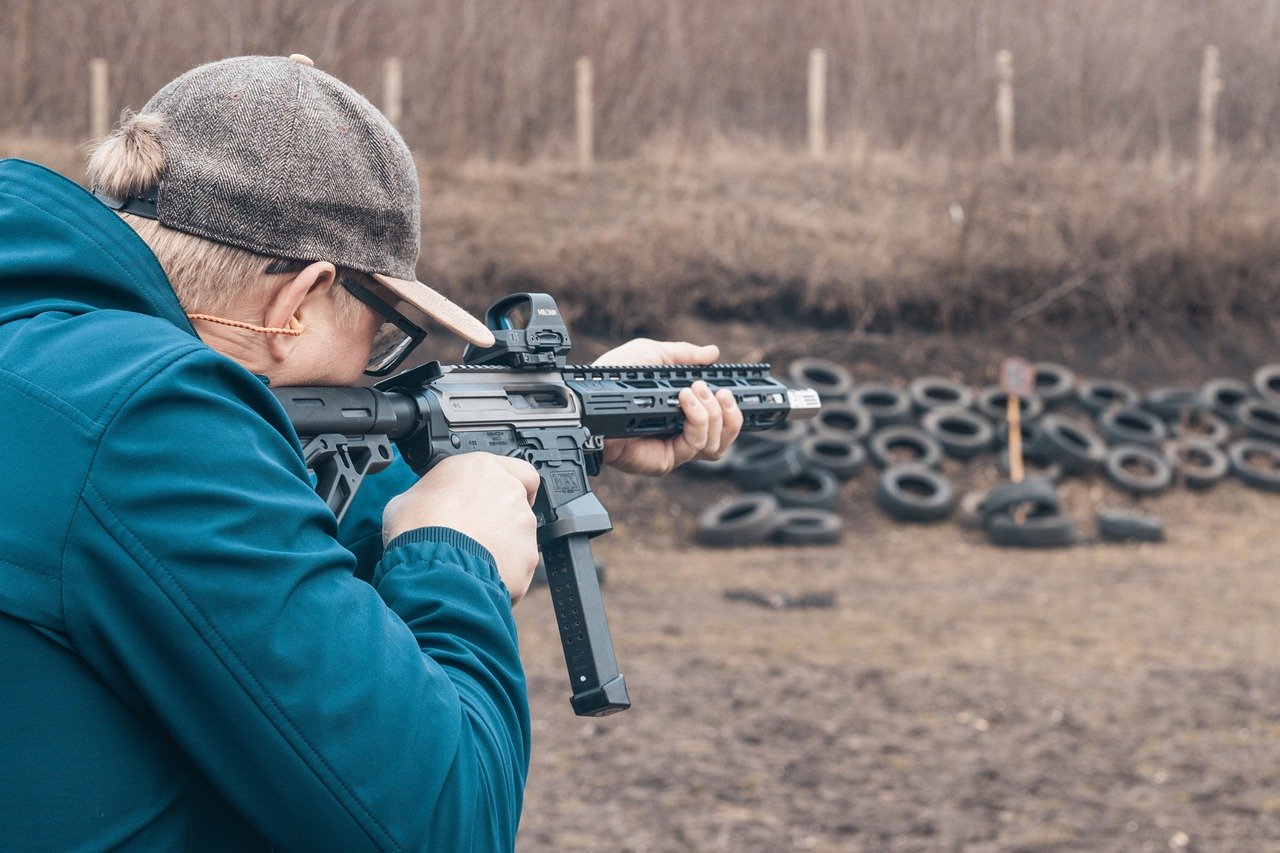
On a rifle like an AR-15, center the grip in the V between your thumb and index finger, and hold it high on the back of the grip. A high grip gives you better control of the muzzle.
Rifles With a Traditional Stock
On many hunting rifles, you wrap your hand around the wrist of the stock. Some instructors suggest using only your middle, ring, and pinky fingers around the wrist, and lining your thumb up along the side of the gun instead of folding it over the top. This keeps your wrist straight and your trigger pull smoother.
In both cases, grip with firm, even pressure. Avoid white-knuckling the gun, as that can hurt your accuracy. Your trigger finger should stay outside the trigger guard until you are ready to fire.
Step 4: Place Your Support Hand Under the Forend
Your support hand does most of the work of holding up the rifle. Put it under the forend (the part of the stock under the barrel) or the handguard. Keep your elbow tucked down and under the rifle, not flared out to the side.
Let the rifle rest in the palm or the “V” of your hand. Do not cup it tightly or squeeze the forend. Gripping the forestock too hard can introduce muscle tremors and tension.
Where you place that hand matters too. Closer to the receiver feels steadier for quick shots. Moving your hand farther forward gives you finer control over the muzzle when precision matters. Try a few spots and pick the one that feels most stable.
If your rifle has a vertical foregrip, do not wrap your whole hand around it like a beer can. Crate Club advises against a full-hand “beer can” grip on a vertical foregrip. Follow the manufacturer’s guidance for your specific rifle and accessories.
Step 5: Seat the Stock and Set Your Cheek Weld
Now bring the rifle to you. Do not lower your head to meet the rifle. Keep your head up and bring the gun to your face.
Find Your Shoulder Pocket
The shoulder pocket is the soft, slightly hollow area between your chest muscle and your shoulder joint. Set the butt of the stock there. The stock should sit in your shoulder, not on your chest or collarbone. Pull the rifle back gently with your support hand so it stays snug.
Build a Repeatable Cheek Weld
A cheek weld is where your cheek rests on the stock so your eye lines up with the sights or scope. A good one helps your eye land in the same place every time. Rest your cheek naturally on the stock, just below your dominant eye.
With a scope, your eye needs the correct distance behind it. If you see a dark ring around the image, adjust your head position or, if the setup allows, the scope mounting. A gunsmith or knowledgeable shop can help with scope mounting.

Pro tip: Mount the rifle the same way every time, and your sight picture will come to you without hunting for it.
Step 6: Relax, Breathe, and Follow Through
Once the rifle is seated, stay relaxed. Tense muscles shake. Check that your elbows are comfortable and the rifle’s weight is resting on your bones and your support hand, not being held up by raw arm strength.
Breathing helps you stay still. A common method is to inhale deeply, exhale halfway, and hold your breath briefly while you squeeze the trigger. Do not hold your breath for long. If your sight picture starts to drift, breathe and start again.
Squeeze the trigger smoothly and straight back. Then follow through: stay on the rifle for a moment after the shot, keep your cheek on the stock, and let the sights settle before you relax. Many missed shots come from lifting your head too early.
When you finish, keep the muzzle in a safe direction, take your finger off the trigger, and unload the rifle before you move.
Common Mistakes When Holding a Rifle
Most beginners make the same few errors. The table below shows what to watch for and how to fix it.
| Mistake | Why it hurts | Fix |
|---|---|---|
| Stock on the collarbone or arm | Recoil feels sharper and the rifle moves around | Move the butt into the shoulder pocket |
| Death grip on the rifle | Adds tremor and can pull shots sideways | Use firm, even pressure only |
| Leaning back | Recoil pushes you off balance | Lean slightly forward into the rifle |
| Dropping your head to the stock | Your eye position changes every shot | Bring the rifle up to a raised head |
| Resting the barrel on a hard surface | Can shift your point of impact | Use a soft pad, pack, or glove under the forend |
| Finger on the trigger too early | Unsafe and can cause a negligent discharge | Keep it straight along the receiver until ready |
Gripping too tightly can also affect where your rounds land. One source notes that many right-handed shooters pull the rifle left when they grip too hard, so shots miss to the left. If your group is off to one side, check your grip pressure first.
Frequently Asked Questions
Where should a rifle sit on your shoulder?
The butt of the stock should sit in the shoulder pocket, the soft area just inside your shoulder joint. Not on the collarbone, and not out on the arm. A snug fit helps spread recoil across your body.
Should you hold a rifle tightly?
Hold it firmly, but do not squeeze as hard as you can. Too much tension causes shaking and can move your shots. Aim for a steady, confident grip that you could keep for several seconds without fatigue.
Which hand goes where on a rifle?
Your trigger hand grips the pistol grip or wrist of the stock. Your support hand goes under the forend or handguard and carries most of the weight. Right-handed shooters use the right hand as the trigger hand, and left-handed shooters do the opposite.
How do you hold a rifle when walking?
Keep the muzzle pointed in a safe direction at all times, and keep your finger outside the trigger guard. Many hunters carry with one hand on the grip and the other on the forend, or use a sling. Follow the carry methods taught in a hunter education course for your situation.
Conclusion
A good rifle hold is a short list of habits: safe handling, a balanced stance, a firm but relaxed grip, a snug shoulder pocket, a repeatable cheek weld, and a smooth follow-through. Start with an unloaded rifle at home, then confirm what you have learned at the range.
If you are new to shooting, consider taking a safety course or asking an experienced shooter to watch your form. Small tweaks make a big difference. Rules for carrying and transporting firearms vary by state, so check with official sources like Oklahoma state agencies or local law enforcement if you are unsure.
If you have questions about rifle fit or want to talk gear, stop by Sooner Guns at 5663 S Mingo Rd in Tulsa, or call us at 918-286-8888. Guns for the good guys and gals.